
There is a moment on the Tungnath trek when the road ends, the sound of vehicles disappears, and the mountains seem to become much closer.
Ahead is a stone trail rising through the high Himalayan landscape.
Behind you is Chopta.
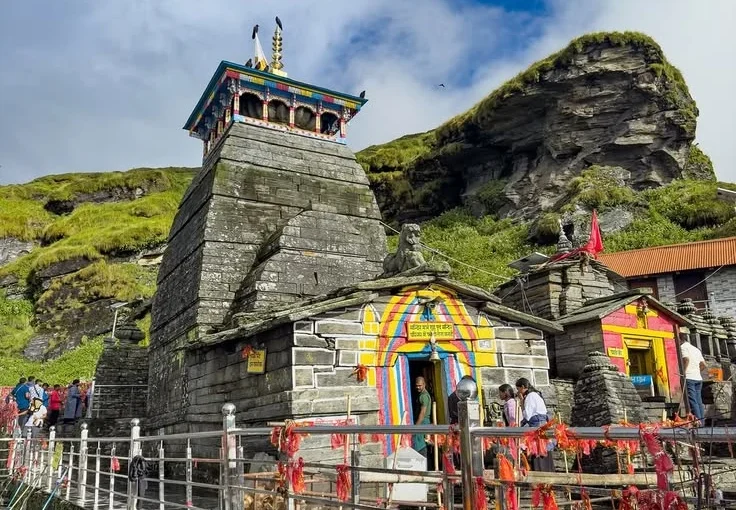
And somewhere above, surrounded by the peaks of Uttarakhand, stands Tungnath Temple — one of the most sacred Shiva temples of the Himalayas and one of the five temples of the Panch Kedar.
At an elevation of about 3,680 metres, Tungnath is recognised by Uttarakhand Tourism as the highest of the Panch Kedar temples. According to the traditional Panch Kedar story, the arms of Lord Shiva appeared at Tungnath.
For a pilgrim, the journey is about faith.
For a trekker, it is about the trail.
For a traveller, it is about the mountains.
And for many visitors, it becomes all three at once.
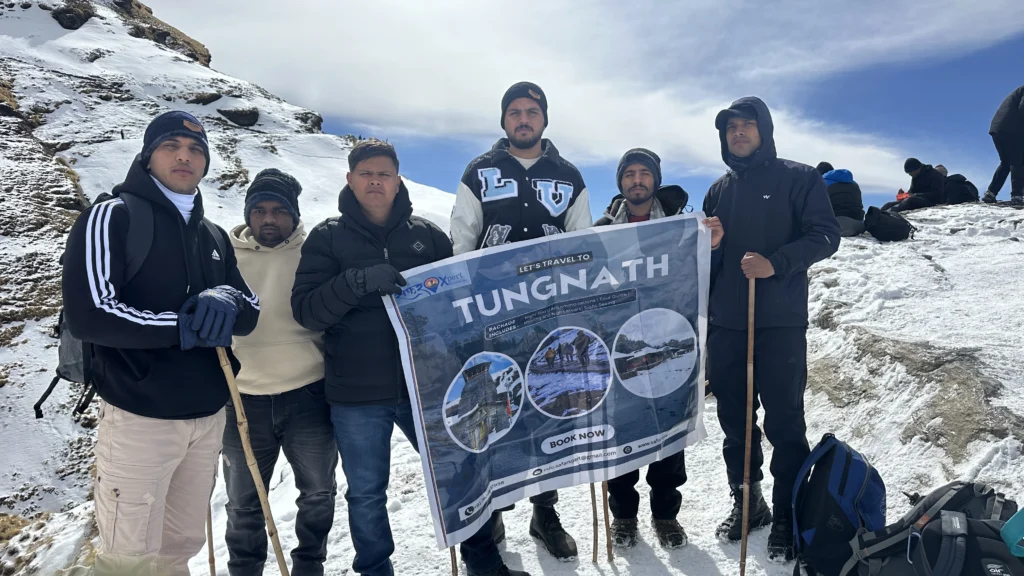
Tungnath Temple Overview
Location: Rudraprayag district, Uttarakhand
Near: Chopta
Altitude: About 3,680 metres
Deity: Lord Shiva
Pilgrimage: Panch Kedar
Trek starts from: Chopta
Trek distance: About 3–4 km, depending on the route and measurement used
Trek type: Steep uphill mountain trail
Nearby summit: Chandrashila
Region: Garhwal Himalayas
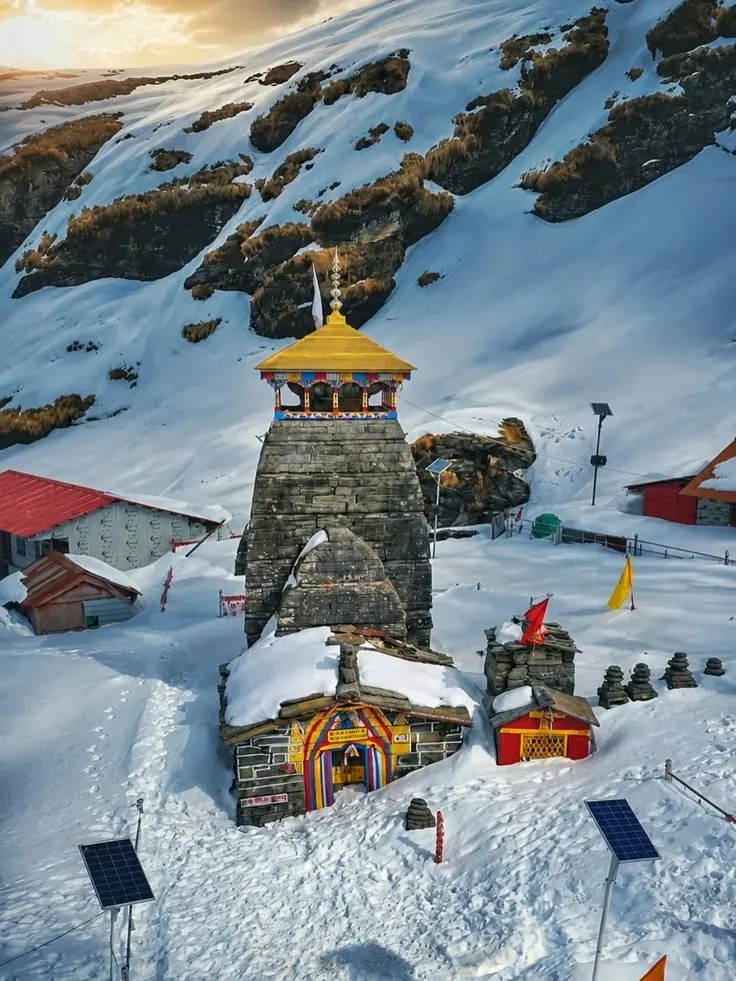
Best travel periods: Generally spring to early summer and post-monsoon, subject to current weather and route conditions
The official Shri Badarinath Kedarnath Temple Committee places Tungnath at 3,680 metres and describes it as one of the sacred Panch Kedar temples. Its published route information gives the trek from Chopta as about 3 km, while Uttarakhand Tourism’s trekking material describes the Chopta–Tungnath trail at about 3 km.
Because trail measurements can vary slightly, travellers should think of Tungnath as a short but steep high-altitude trek, rather than judging it only by kilometres.
Why Is Tungnath Temple Famous?
Tungnath is famous for several reasons.
It is a sacred Panch Kedar temple dedicated to Lord Shiva.
It stands high in the Garhwal Himalayas.
It is reached by trekking from Chopta.
It has a long religious tradition connected with the Mahabharata and the Pandavas.
And it sits on the route to Chandrashila, making the journey attractive to both pilgrims and trekkers.
Uttarakhand Tourism describes Tungnath as one of the highest Shiva temples in the world and places it at 3,680 metres. The same source identifies Tungnath as the place where, according to the Panch Kedar tradition, Shiva’s arms appeared.
That combination of faith, history, trekking and Himalayan scenery is what makes Tungnath different from an ordinary mountain destination.
Tungnath Temple and Panch Kedar
To understand Tungnath, it helps to understand Panch Kedar.
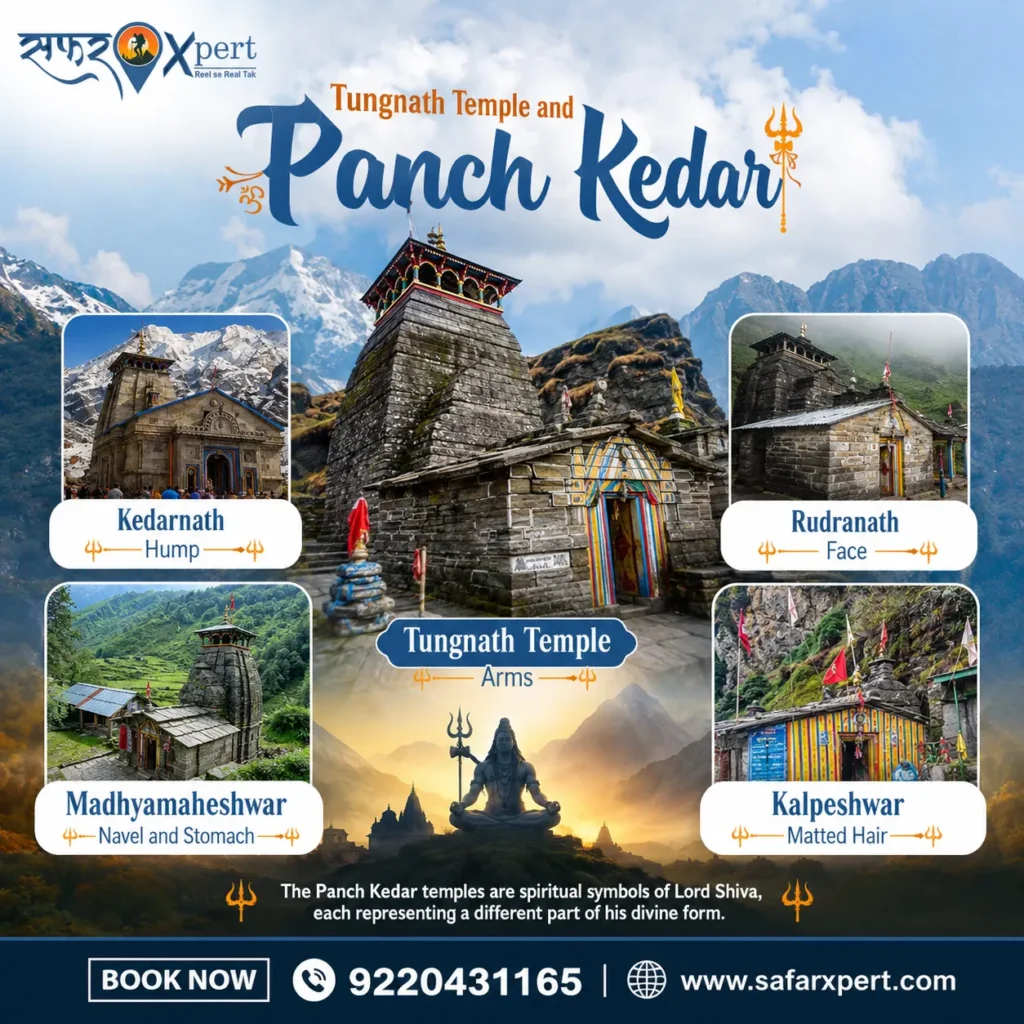
Panch Kedar means the five sacred Shiva shrines of Uttarakhand:
- Kedarnath
- Tungnath
- Rudranath
- Madhyamaheshwar
- Kalpeshwar
According to the traditional story, the Pandavas wanted to seek Lord Shiva’s blessings after the Kurukshetra war.
Shiva did not wish to appear before them and is believed to have taken the form of a bull.
When the Pandavas recognised him, Shiva disappeared into the earth and his different parts appeared at five places in the Garhwal Himalayas.
The traditional association is:
Kedarnath — hump
Tungnath — arms
Rudranath — face
Madhyamaheshwar — navel and stomach
Kalpeshwar — matted hair
This is the traditional religious story behind the Panch Kedar circuit, not a historical account that can be independently verified. Uttarakhand Tourism itself presents this as a popular belief connected with the Panch Kedar tradition.
Which Kedar Is Tungnath?
Tungnath is traditionally known as the third Kedar in the Panch Kedar pilgrimage sequence.
It is important not to confuse this with the physical order in which every traveller must visit the five temples.
The Panch Kedar circuit includes five different Shiva shrines spread across the Garhwal Himalayas.
Tungnath is the most accessible of these high mountain Kedars for many travellers because the trek from Chopta is relatively short compared with some of the other Panch Kedar routes.
What Part of Lord Shiva Is Worshipped at Tungnath?
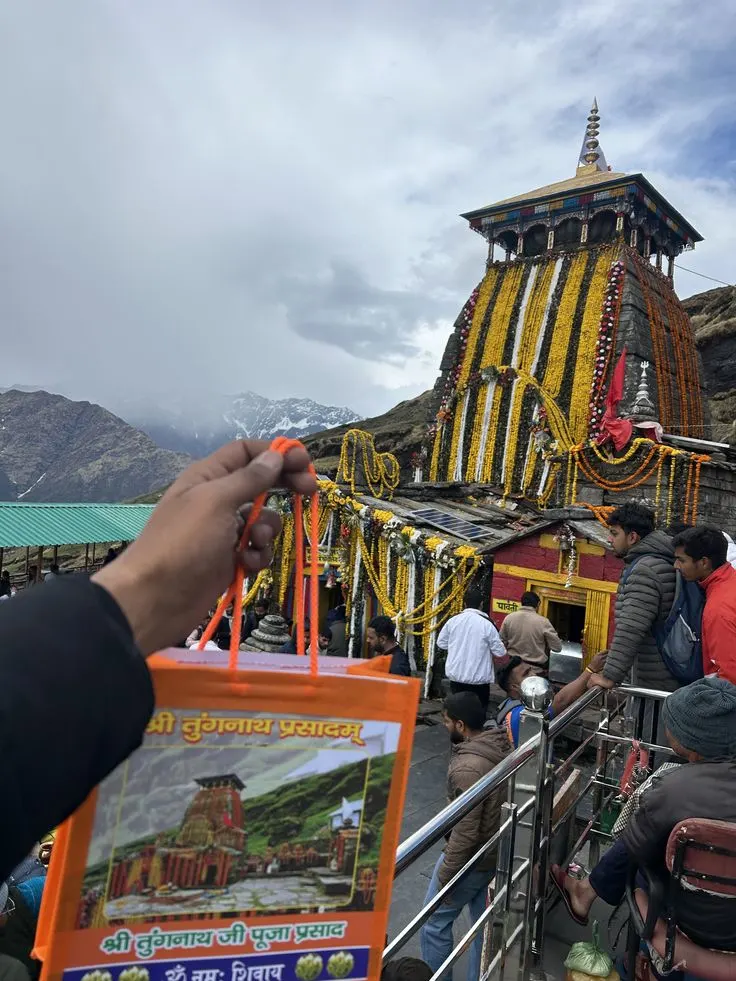
According to the traditional Panch Kedar belief, the arms of Lord Shiva appeared at Tungnath.
This is one of the main reasons Tungnath holds such an important place in Shaivite pilgrimage.
The story connects Tungnath with the larger spiritual journey of the Panch Kedar.
So when pilgrims walk up from Chopta, they are not simply going towards an old mountain temple.
They are walking towards one of the five sacred manifestations of Shiva described in the traditional Panch Kedar story.
Tungnath Temple History
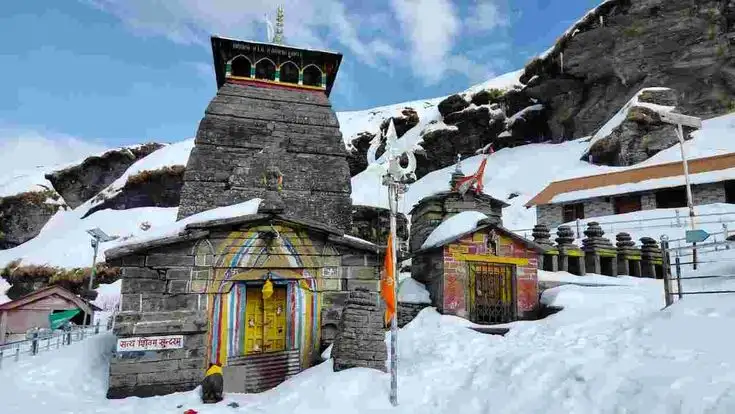
Tungnath Temple stands at an altitude of about 3,680 metres in Uttarakhand and is traditionally regarded as one of the oldest and most sacred Shiva temples in the Himalayas. According to the Panch Kedar tradition, the temple is associated with the arms of Lord Shiva and is known as the Third Kedar.
The traditional story connects Tungnath with the Pandavas of the Mahabharata. After the Kurukshetra war, the Pandavas are believed to have sought Lord Shiva’s blessings. According to the legend, Shiva appeared in the form of a bull and later manifested at five sacred places, which became known as the Panch Kedar. Tungnath is traditionally associated with the arms of Shiva.
The temple is reached by a scenic uphill trek from Chopta, with the commonly quoted trekking distance being around 3–4 km. Its stone structure, high Himalayan location and long religious tradition make the Tungnath Temple history an important part of the Chopta and Panch Kedar pilgrimage experience.
The Pandavas and Tungnath Temple
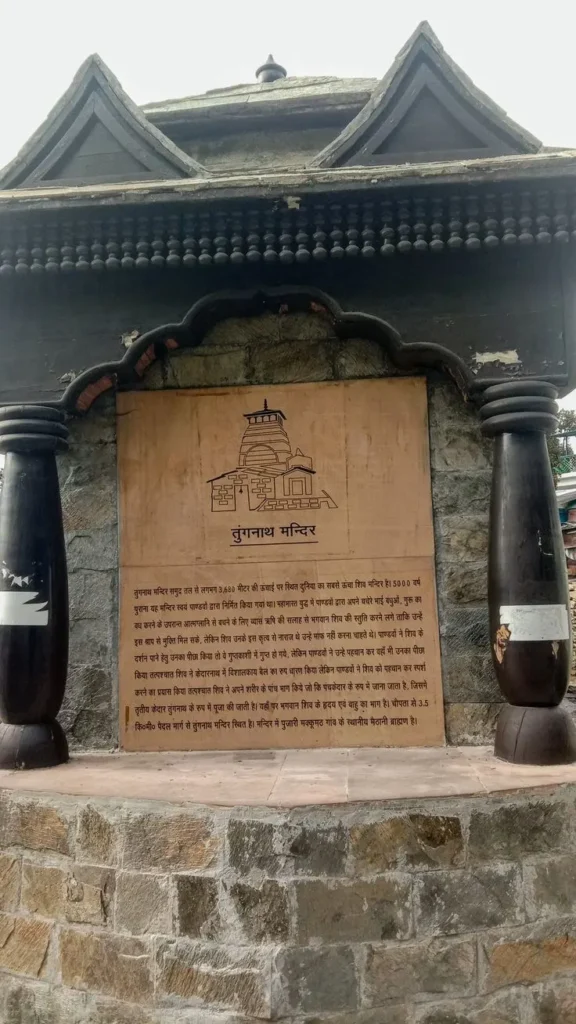
The story of Tungnath begins, according to tradition, after the Mahabharata war.
The Pandavas were troubled by the destruction caused by the war and wanted the blessings of Lord Shiva.
Shiva, however, is said to have avoided them by taking the form of a bull.
The Pandavas followed him.
When Bhima tried to stop the bull, Shiva disappeared into the ground.
Different parts of the divine form are believed to have appeared at the five Panch Kedar locations.
At Tungnath, the arms are believed to have appeared.
That is the story that gives Tungnath its special place among the five Kedars.
Tungnath Temple Architecture
The first thing many visitors notice is not a huge temple complex.
It is the simplicity of the stone structure standing against the mountains.
The temple reflects the traditional Himalayan mountain temple character, using stone construction suited to the high-altitude environment.
Its small scale makes it feel closely connected to the surrounding landscape.
The temple is approached through the mountain trail, and the final view is especially striking when the stone shrine appears against the open Himalayan sky.
Descriptions of Tungnath commonly identify its architecture with the North Indian/Himalayan temple tradition, although precise historical claims about its original construction should be treated carefully.
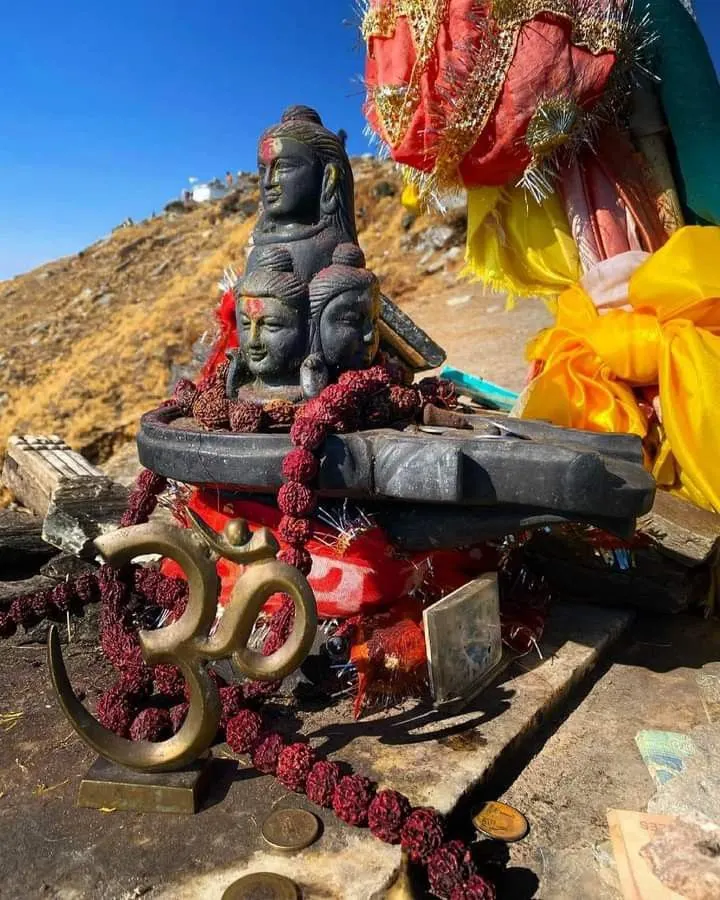
Tungnath Temple Shiva Statue
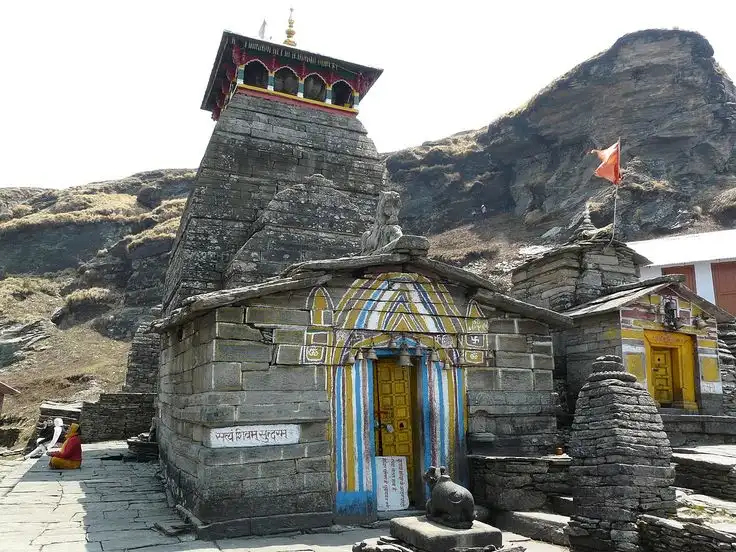
Visitors may also come across images and references to Shiva statues around the Tungnath–Chopta region.
However, these should not be confused with the main deity worshipped inside the temple.
The religious importance of Tungnath comes from the Shiva shrine itself and the traditional manifestation of Shiva’s arms, which is central to its Panch Kedar identity.
When photographing or describing a Shiva statue near Tungnath, identify its exact location so visitors do not mistake a nearby statue for the main temple deity.
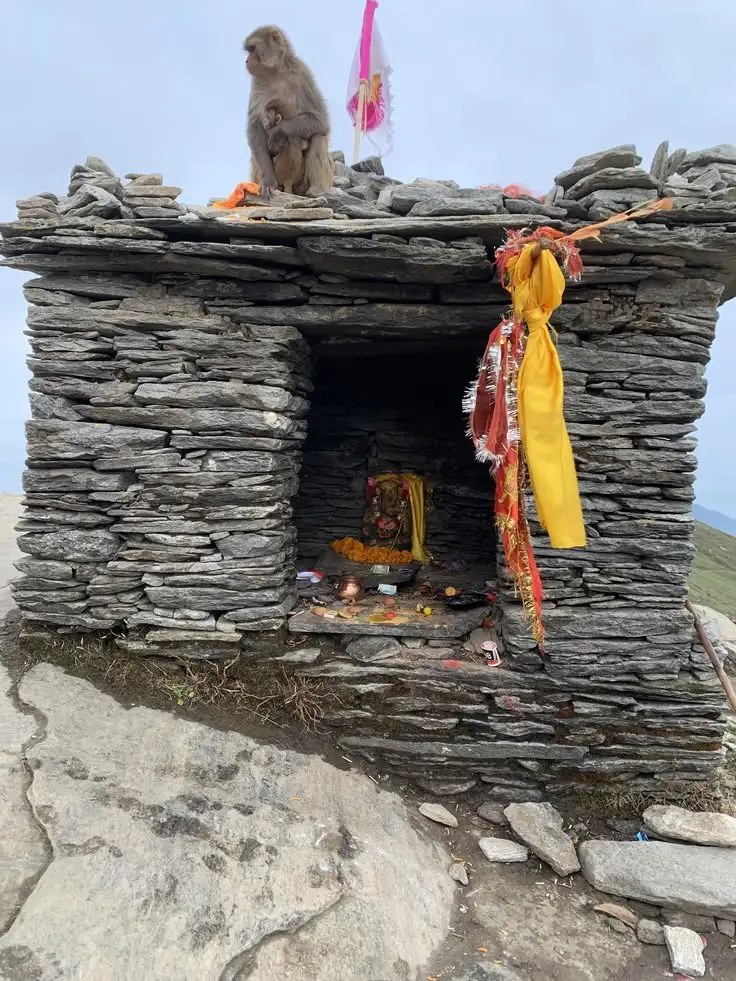
Ganesh Temple on the Tungnath Trek
The walk from Chopta has its own small spiritual landmarks.
One of the better-known features of the trail is a small Ganesh shrine near the upper section of the route.
Travellers often stop here for a short prayer before continuing towards Tungnath.
This small shrine adds another layer to the trek.
The journey is not simply:
Chopta → Tungnath.
It becomes a gradual movement through forest, open slopes, mountain views and small sacred places along the trail.
Travel accounts and local references describe a small Ganesh Temple on the approach to Tungnath.
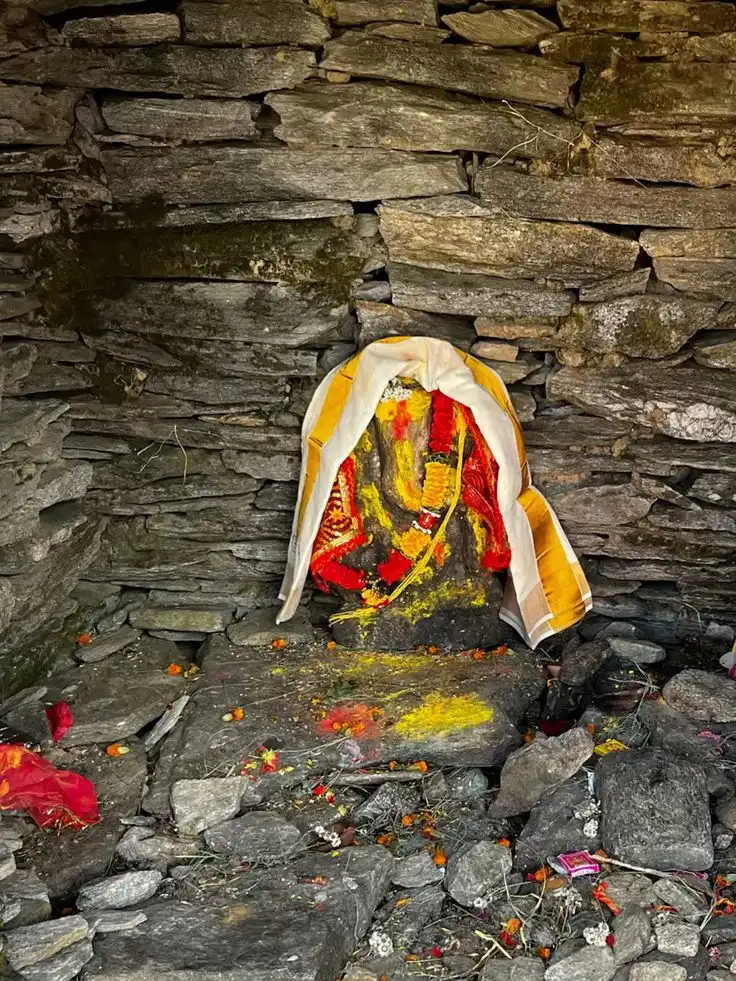
Ganesh Statue on the Tungnath Trek
The Ganesh Statue on the Tungnath Trek is a small sacred shrine along the route from Chopta to Tungnath. According to local tradition, pilgrims stop here to seek Lord Ganesha’s blessings before continuing their uphill journey. It adds a peaceful spiritual touch to the famous Chopta Tungnath trek.
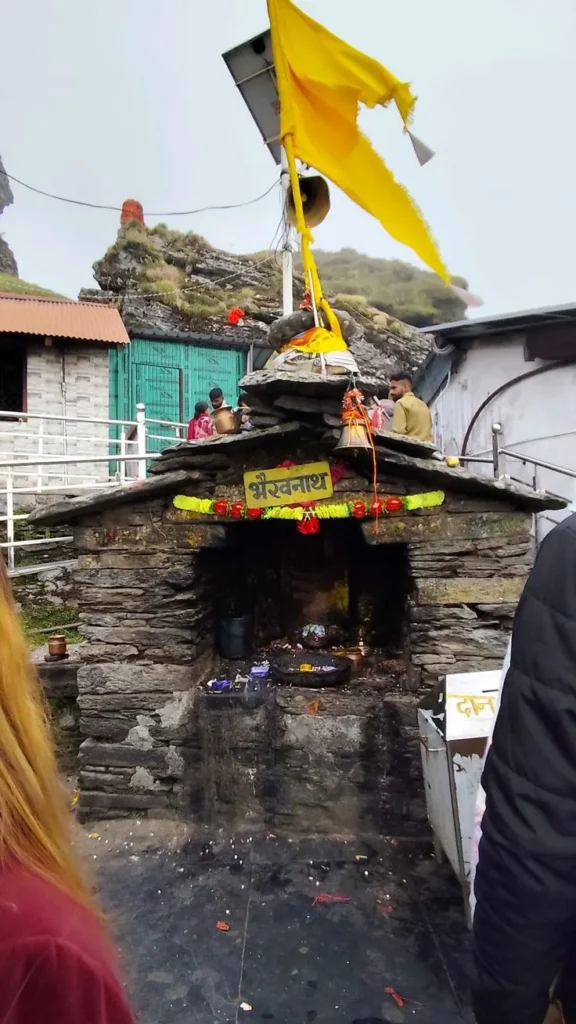
Bhairavnath and Tungnath
Bhairavnath is closely associated with Shiva worship in the Himalayan region, and travellers sometimes search for a Bhairavnath cave or Bhairav shrine near Tungnath.
However, there is an important distinction.
The well-known Bhairavnath Temple associated with the Kedarnath pilgrimage is near Kedarnath and is different from Tungnath. The official Kedarnath information identifies Bhairav as the protector of the Kedarnath area.
So if you are planning content around “Bhairavnath Temple near Tungnath,” clearly identify the location rather than combining the two destinations.
This avoids confusion for visitors searching Google for both Kedarnath Bhairavnath Temple and Tungnath Temple.
Tungnath Trek from Chopta
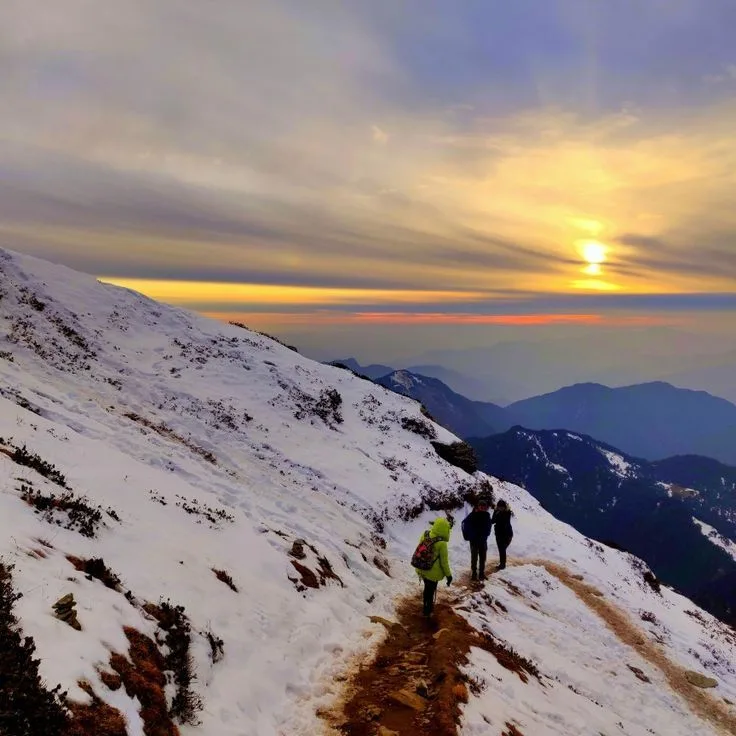
The Chopta Tungnath trek is the main way visitors reach the temple.
The journey begins at Chopta.
At first, the trail passes through the beautiful mountain landscape around Chopta.
As you climb higher, the forest gradually gives way to more open slopes.
The view becomes wider.
The air becomes colder.
The trail becomes steeper.
And after a steady climb, the temple appears ahead.
The official BKTC information describes the trek from Chopta to Tungnath as about 3 km, while Uttarakhand Tourism’s trekking itinerary also places the trail at around 3 km. Other travel references measure it somewhat differently, so a practical plan is to allow roughly 3–4 km one way and several hours depending on pace, weather and breaks.
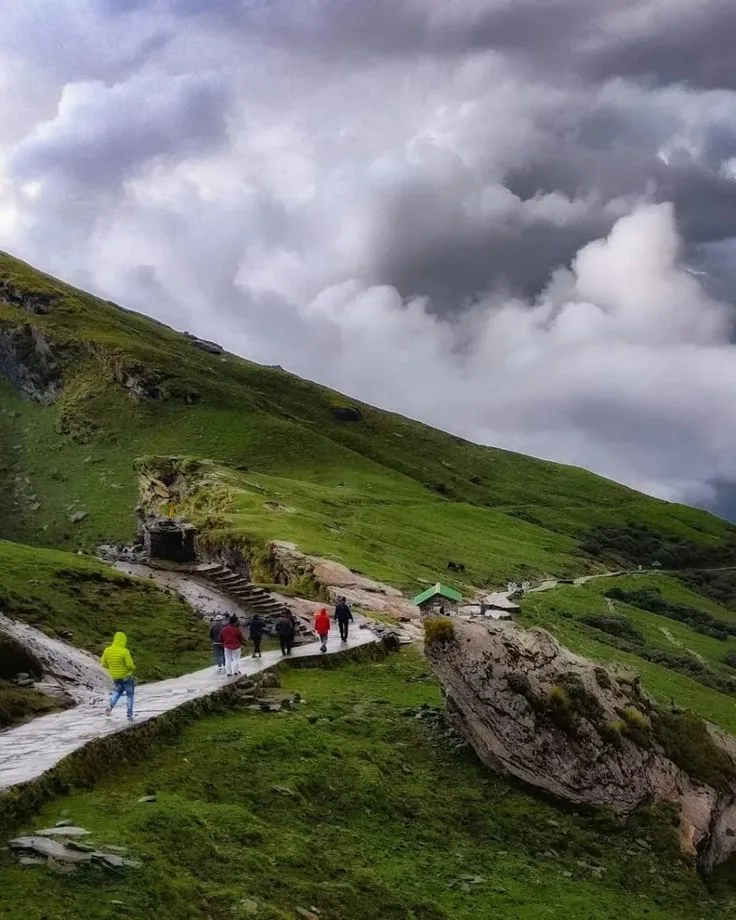
Tungnath Trek Distance and Difficulty
The Tungnath Trek from Chopta is around 3–4 km one way and is generally considered a moderate uphill trek. The short distance can still feel challenging because Tungnath Temple is located at about 3,680 metres, so a steady pace and regular breaks are recommended.
- Starting Point: Chopta
- Distance: Approximately 3–4 km one way
- Difficulty: Moderate
- Altitude: About 3,680 metres
- Trek Type: Uphill mountain trail
- Tip: Check weather and trail conditions before starting.
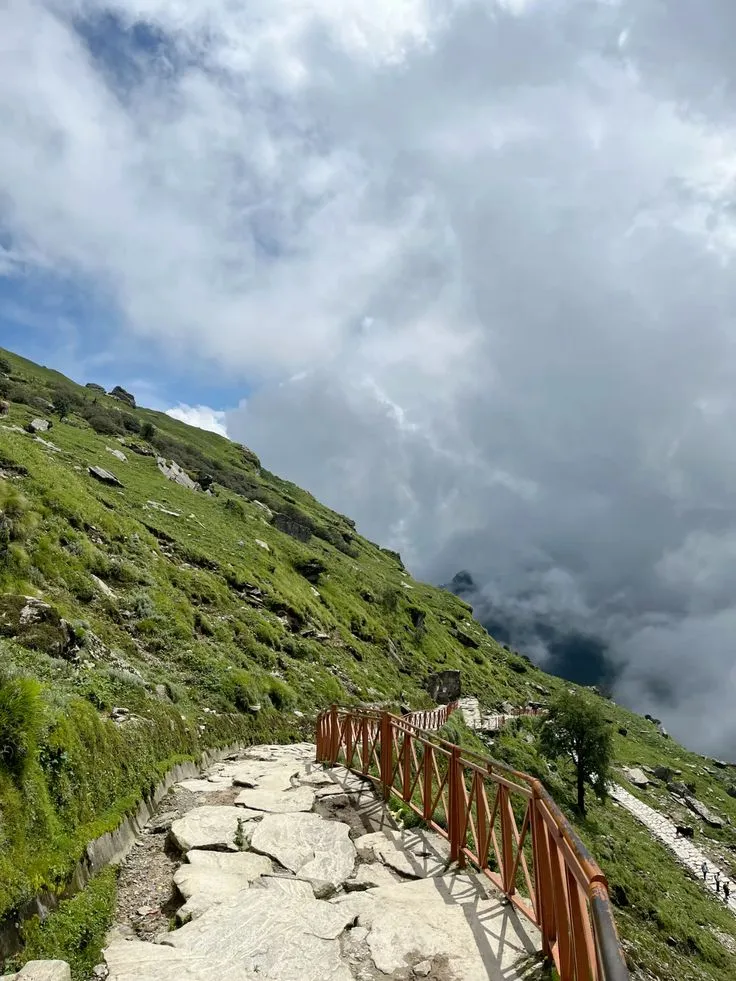
Tungnath and Chandrashila Trek
Many travellers continue beyond Tungnath to Chandrashila Peak.
The official Uttarakhand Tourism trekking itinerary places Chandrashila about 1.5 km beyond Tungnath and describes the climb as steeper, especially in winter. It also highlights the wide Himalayan views from the summit.
So the complete adventure is often:
Chopta → Tungnath Temple → Chandrashila
For pilgrims, Tungnath may be the main destination.
For trekkers, Chandrashila can be the final summit.
You can plan either experience according to your time, fitness and weather.
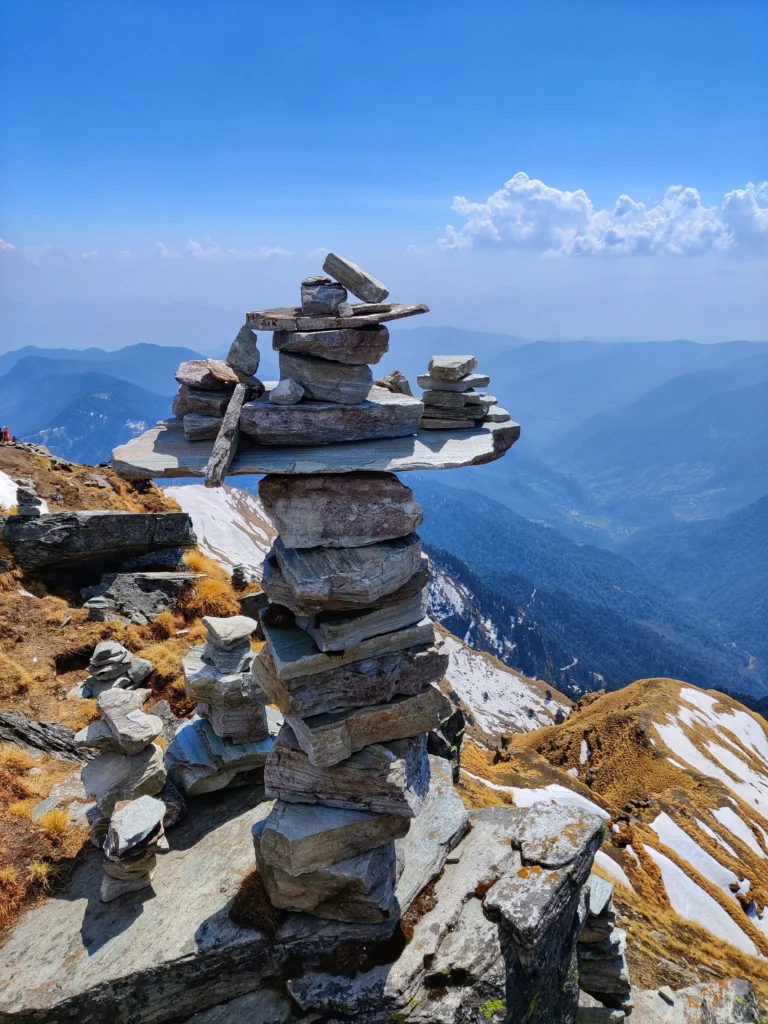
Best Time to Visit Tungnath Temple
The best time depends on what you want to experience.
April to June
This is generally a popular period for the Tungnath trek.
The weather is usually more suitable for mountain travel than the deep winter months, although conditions can still be cold at altitude.
July to August
Monsoon brings rain to Uttarakhand.
Mountain roads and trails can become more difficult, and weather conditions can change quickly.
If you travel during this period, keep your plans flexible and check current conditions.
September to October
The post-monsoon period can offer clear mountain views and cooler weather.
It is an attractive period for trekking and photography, subject to the year’s weather and temple schedule.
Winter
Heavy snowfall makes the upper Tungnath region difficult to access.
The temple follows a seasonal opening pattern and remains closed during the winter period. The deity’s symbolic image is traditionally moved to its winter location.
Tungnath Temple Opening and Closing
Tungnath Temple is a seasonal high-altitude shrine, so its opening and closing dates can change every year according to the traditional temple calendar, rituals and local conditions. Before planning your Tungnath Yatra or Chopta Tungnath trek, always check the latest official schedule rather than relying on an old date.
Before your journey, check:
- Tungnath Temple opening date
- Tungnath Temple closing date
- Current weather conditions
- Road and trek conditions
- Latest local travel updates
Tungnath Temple Timings
Temple timings can change according to the season, daily pooja schedule and local arrangements.
Instead of publishing an old fixed timing as permanent information, check the latest local or temple authority update before your visit.
If your goal is darshan, start your trek early enough to allow for:
uphill walking + rest + darshan + return journey.
This is especially important if you are planning to continue to Chandrashila.
How to Reach Tungnath Temple
Tungnath Temple is a mountain destination in Uttarakhand, and the easiest way to reach it is to travel first to Dehradun, Rishikesh or Haridwar, then continue by road to Chopta.
You cannot drive directly to Tungnath Temple.
The journey has two parts:
Road journey to Chopta + trek from Chopta to Tungnath.
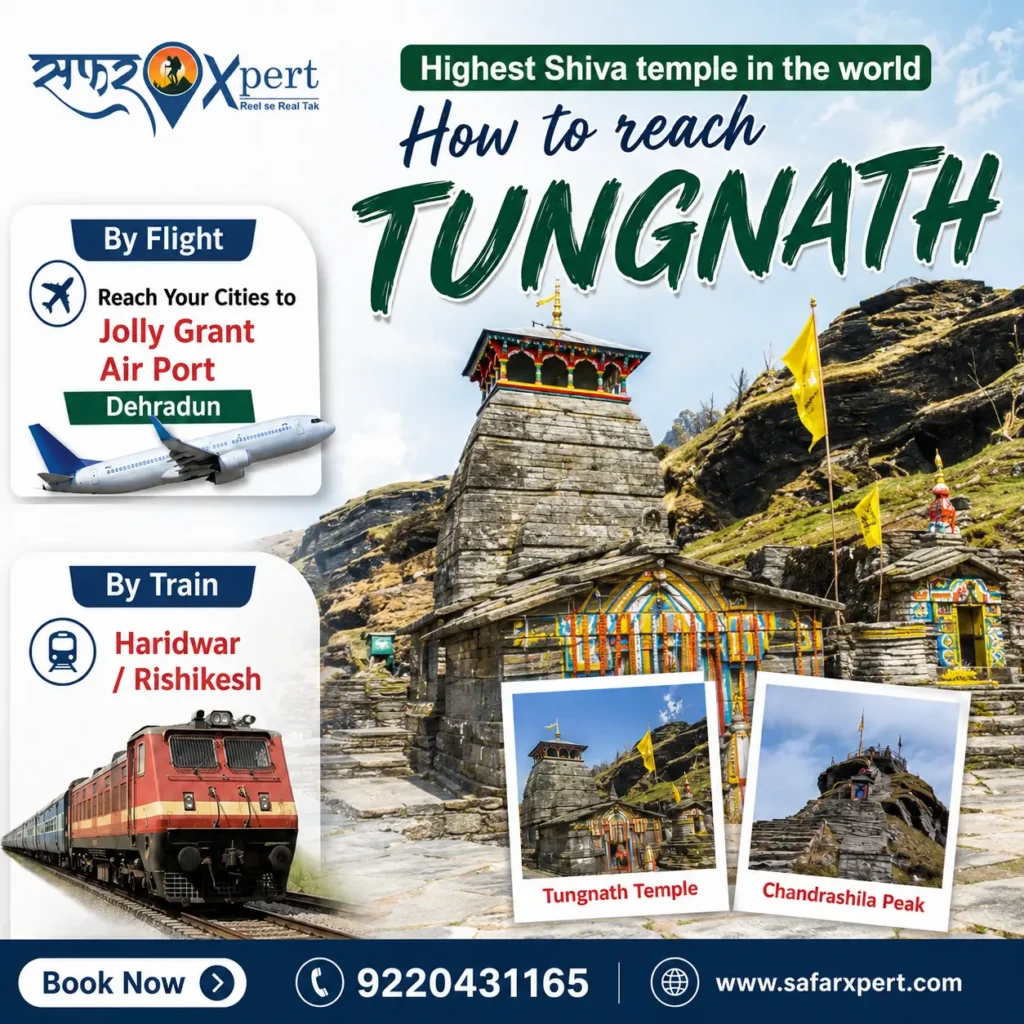
By Road
Chopta is the main road-access point for the Tungnath trek.
Travellers commonly reach the region through routes connecting Rishikesh, Rudraprayag, Ukhimath and Chopta.
Fly to Jolly Grant Airport (Dehradun), the nearest airport to Chopta. From the airport, continue your journey by road towards Chopta.
By Train
The nearest major railway access is generally Rishikesh, from where travellers continue by road.
By Air
Jolly Grant Airport near Dehradun is the nearest major airport for this journey.
From the airport, you continue by road towards the Garhwal region and Chopta.
Tungnath from Delhi
The Tungnath journey from Delhi usually follows the route Delhi → Haridwar/Rishikesh → Devprayag → Srinagar → Rudraprayag → Ukhimath → Chopta. From Chopta, the final journey to Tungnath Temple is completed on foot. Travel time can vary with traffic, weather and mountain road conditions, so keep extra time for breaks and delays.
Tungnath from Haridwar and Rishikesh
Haridwar and Rishikesh are convenient starting points for the Tungnath journey. From here, travellers can continue by road towards Chopta and stay overnight before starting the Chopta to Tungnath trek. Starting the trek early helps allow enough time for darshan, rest and the return journey.
Tungnath Temple from Kedarnath
Tungnath and Kedarnath are both important Shiva pilgrimage destinations in Uttarakhand, but they are different temples and different trekking routes.
Kedarnath is one of the Panch Kedar and one of the 12 Jyotirlingas, while Tungnath is another Panch Kedar shrine where Shiva’s arms are traditionally believed to have appeared.
Travellers planning a larger Shiva pilgrimage can combine the two in a wider Uttarakhand itinerary, depending on road conditions and available time.
Tungnath Temple Weather
Tungnath Temple weather changes quickly due to its high altitude, so conditions can be very different from Chopta. Check the latest forecast before starting the Tungnath trek and carry warm layers and rain protection.
Month | Weather | Temperature* |
January | Heavy snow, very cold | -10°C to 2°C |
February | Snow-covered, freezing | -8°C to 3°C |
March | Cold with snow | -5°C to 7°C |
April | Cold, snow may remain | 0°C to 10°C |
May | Pleasant days, cold nights | 5°C to 15°C |
June | Cool and comfortable | 8°C to 18°C |
July | Rainy and cloudy | 7°C to 16°C |
August | Rainy, misty | 7°C to 16°C |
September | Cool and clearer | 5°C to 15°C |
October | Cold and mostly clear | 0°C to 12°C |
November | Very cold, snowfall possible | -5°C to 7°C |
December | Heavy snow, freezing | -10°C to 2°C |
Temperatures are approximate and can vary with altitude and daily weather conditions.
Travel Note: Always check the current Tungnath weather and trek conditions before travelling. Mountain weather can change suddenly, so carry warm clothing, rain protection, water and essential medicines.
What to Carry for the Tungnath Trek
You do not need a huge bag.
Carry the essentials:
- Comfortable trekking shoes
- Warm layers
- Rain jacket or poncho
- Water bottle
- Sunglasses
- Sunscreen
- Personal medicines
- Basic first-aid items
- Snacks
- Power bank
- Identification documents
- Small backpack
The weather can change, so even during summer you should carry warm clothing.
Tungnath Trek with Children
The Tungnath trek with children can be enjoyable with proper planning, but the high altitude and uphill trail require a comfortable pace. Allow regular breaks, carry water and warm clothing, and avoid pushing children if they feel tired. Always check the Tungnath weather and trek conditions before starting, and choose safety over completing the trek in poor conditions.
Tungnath Trek for Senior Citizens
Senior citizens should plan the Tungnath journey with extra care.
The altitude is significant.
The trail is uphill.
Cold and weather changes can increase fatigue.
Anyone with an existing health condition should seek appropriate medical advice before travelling.
A slower itinerary with rest is usually better than trying to complete the trek quickly.
What to See Around Tungnath
Tungnath is not the only attraction in the area.
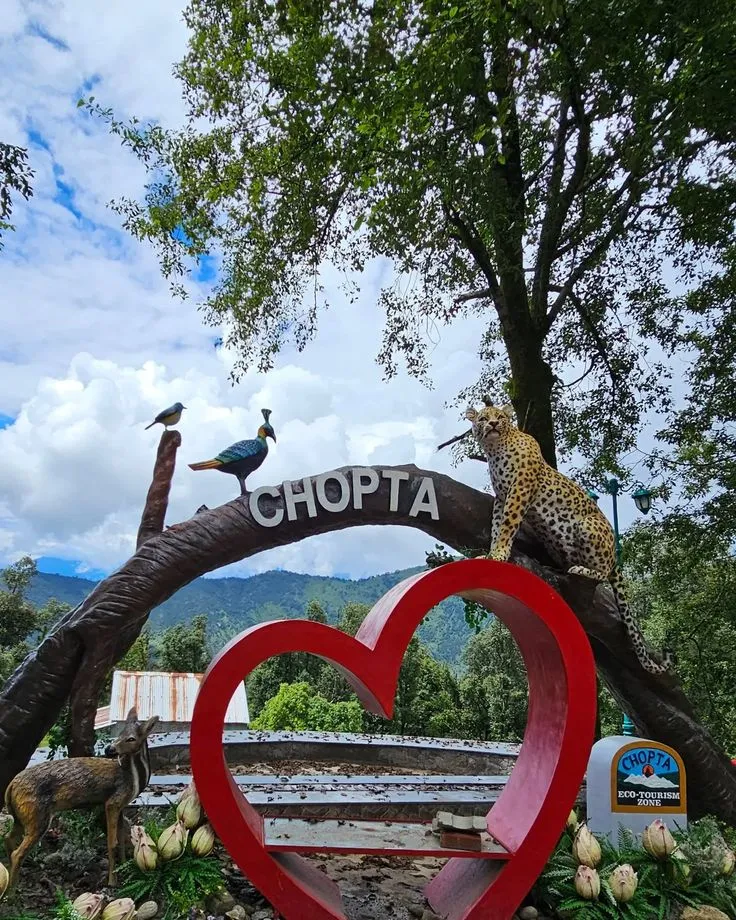
Chopta
Chopta is the main starting point for the Tungnath Temple trek and a scenic Himalayan destination in Uttarakhand. From Chopta, travellers begin the uphill trail to Tungnath and Chandrashila, making it an important stop for both pilgrims and trekkers.
- Trek starts: Chopta
- Popular routes: Tungnath Temple & Chandrashila
- Known for: Himalayan views, green meadows and trekking
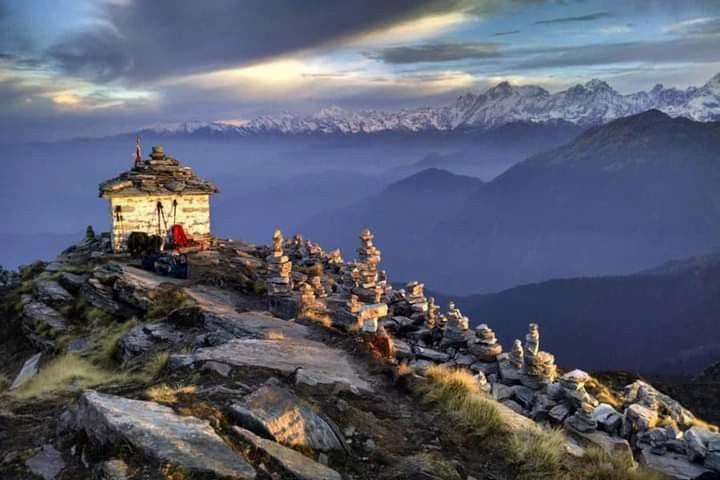
Chandrashila Summit
Chandrashila is the summit above Tungnath and is famous for its wide Himalayan mountain views. The trek continues from Tungnath to the summit, making it a popular adventure near Chopta.
- Best known for sunrise and Himalayan views
- Usually visited as part of the Chopta–Tungnath–Chandrashila trek
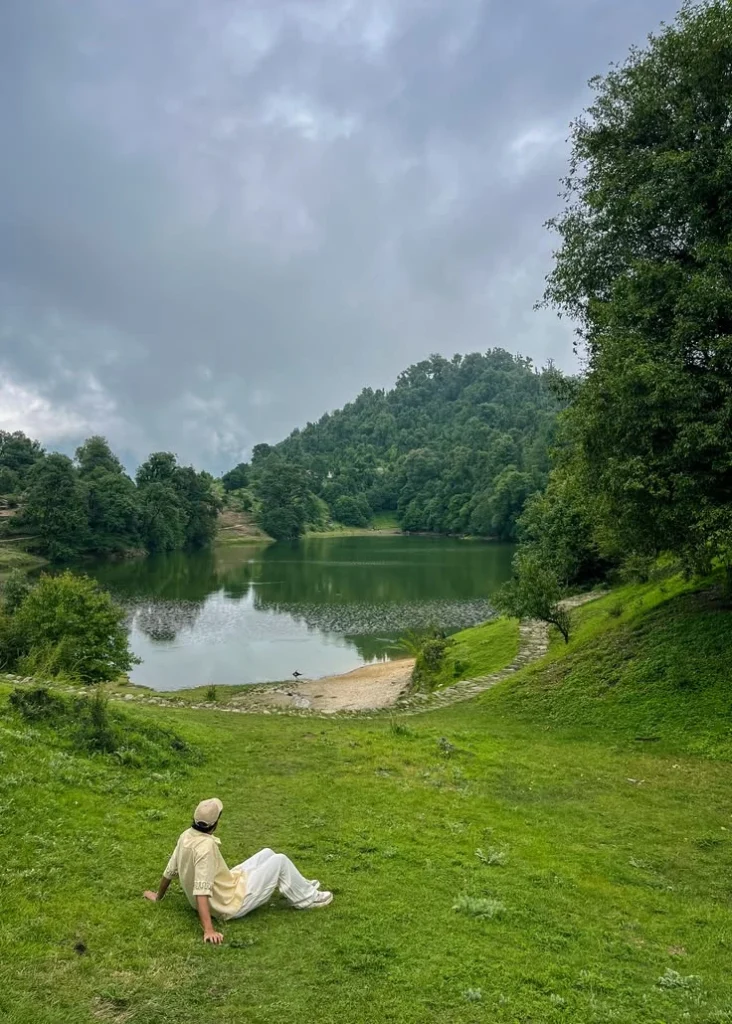
Deoria Tal
Deoria Tal is a scenic mountain lake near Sari Village, known for its peaceful surroundings and Himalayan reflections. It is a popular addition to Chopta itineraries and trekking trips.
- Starting point: Sari Village
- Popular for nature walks, camping and mountain views
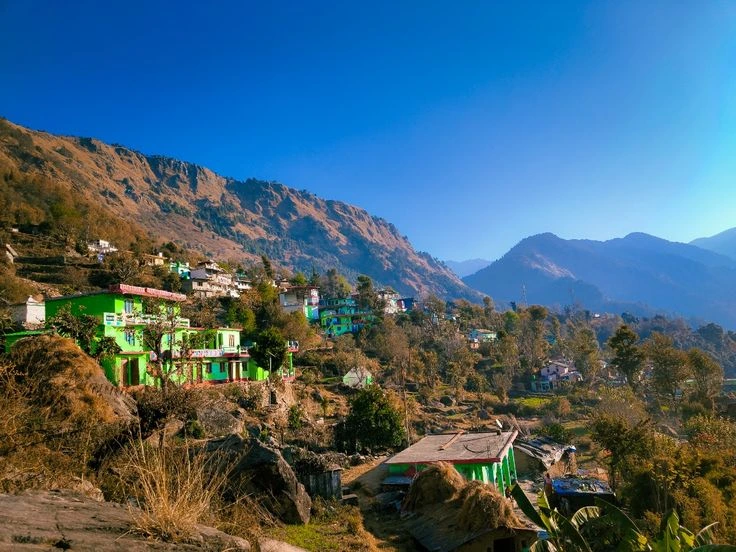
Sari Village
Sari Village is the main starting point for the Deoria Tal trek. It is a peaceful Himalayan village where travellers can begin their walk to the lake and experience local mountain life.
Baniyakund
Baniyakund is a scenic area near Chopta and a useful base for travellers exploring the surrounding trekking routes. Its meadows, forests and mountain setting make it a pleasant stop for nature lovers and trekkers.
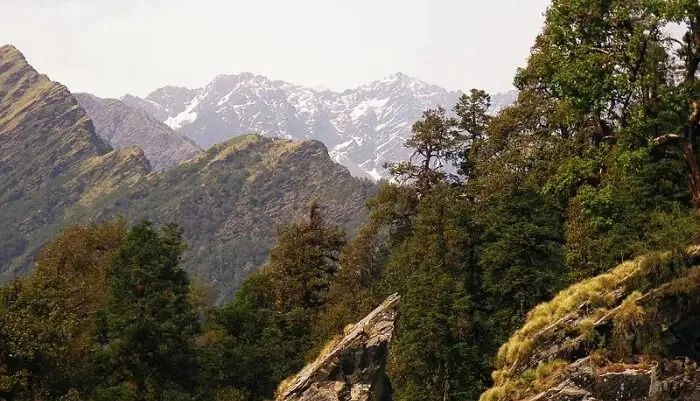
Things to Do in Chopta
Chopta offers more than trekking. From mountain views and snowfall to peaceful nature walks and camping, there are plenty of ways to enjoy the Chopta experience.
Trek to Tungnath
The Tungnath Trek from Chopta is the most popular activity in the region. Walk through mountain meadows and forests to reach the famous Tungnath Temple.
Trek to Chandrashila
For a longer adventure, continue from Tungnath to the Chandrashila Summit. The top offers impressive views of the Himalayan peaks on clear days.
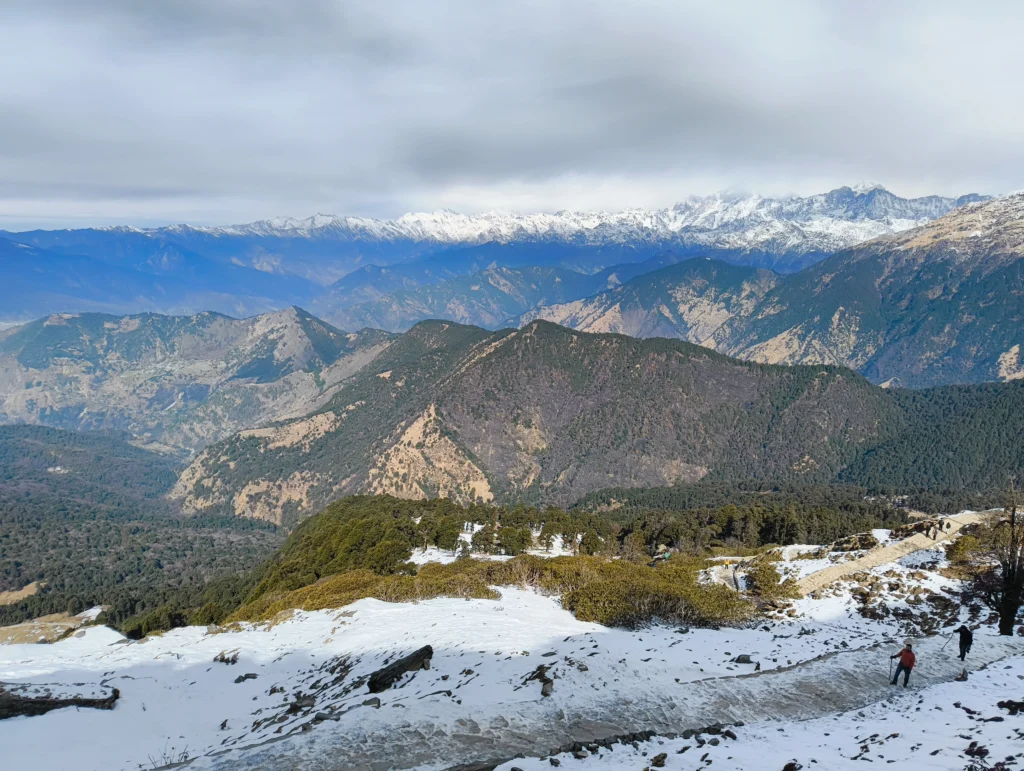
Enjoy Himalayan Views
Take a quiet walk through Chopta’s meadows and enjoy the changing colours of the surrounding mountains.
- Best enjoyed during clear mornings
- Great for sunrise, sunset and landscape photography
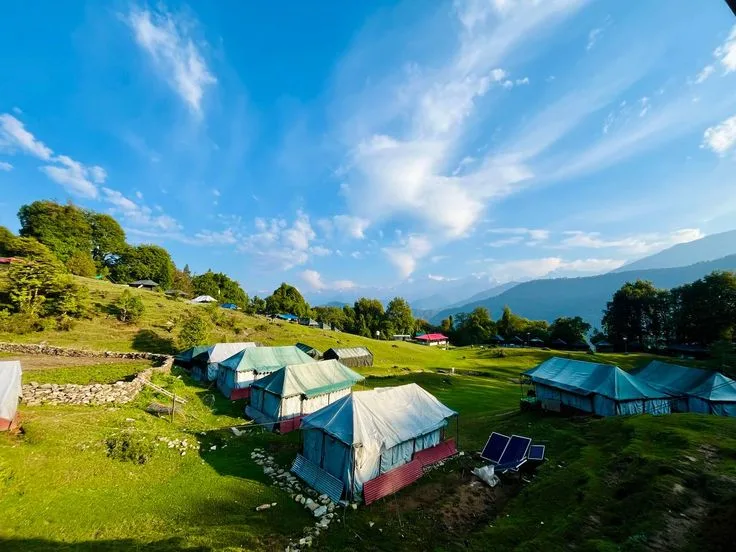
Camping in Chopta
Camping in Chopta is a peaceful way to experience the mountains after sunset. Enjoy fresh air, quiet surroundings and clear night skies when weather permits.
Nature Walks
Not every Chopta experience needs a long trek. Short walks through meadows and forest trails are ideal for relaxing and enjoying the Himalayan landscape.
Photography
Chopta is a great place for mountain photography, with opportunities to capture forests, meadows, sunrise, sunset and Himalayan peaks.
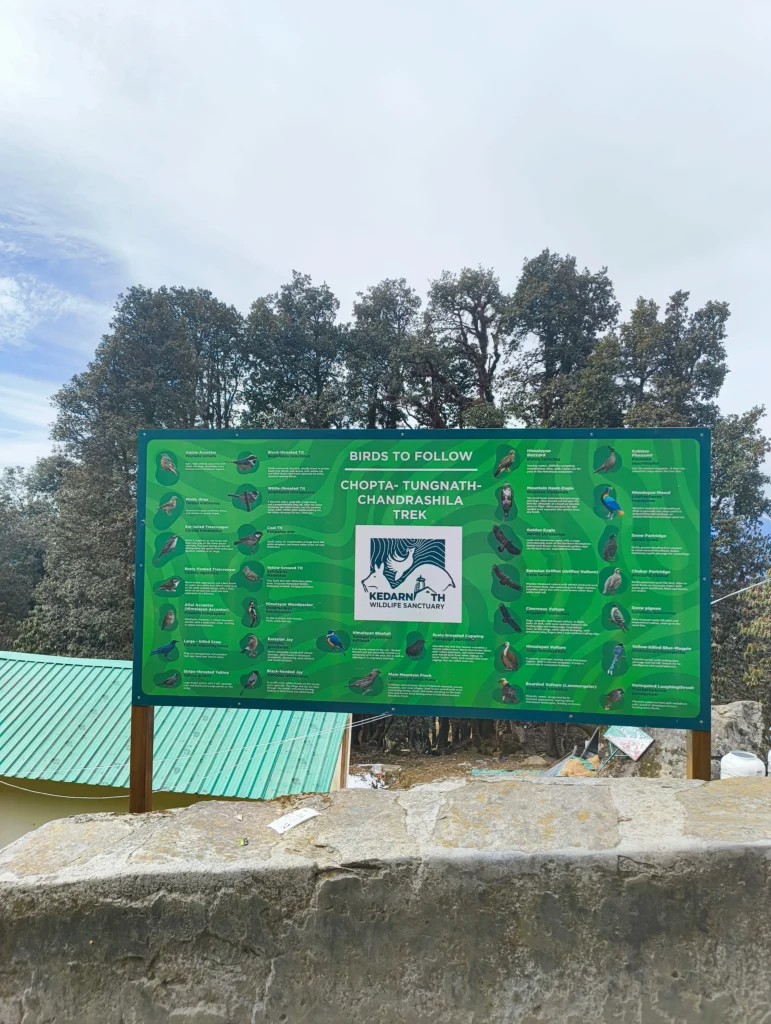
Bird Watching
Kedarnath
Kedarnath is one of the most revered Shiva temples in Uttarakhand and one of the five Panch Kedar shrines. It is also a major pilgrimage destination and an important place to include when planning a Char Dham Yatra or Panch Kedar journey.
- Location: Rudraprayag, Uttarakhand
- Deity: Lord Shiva
- Known for: Kedarnath Temple, Himalayan pilgrimage and Panch Kedar tradition
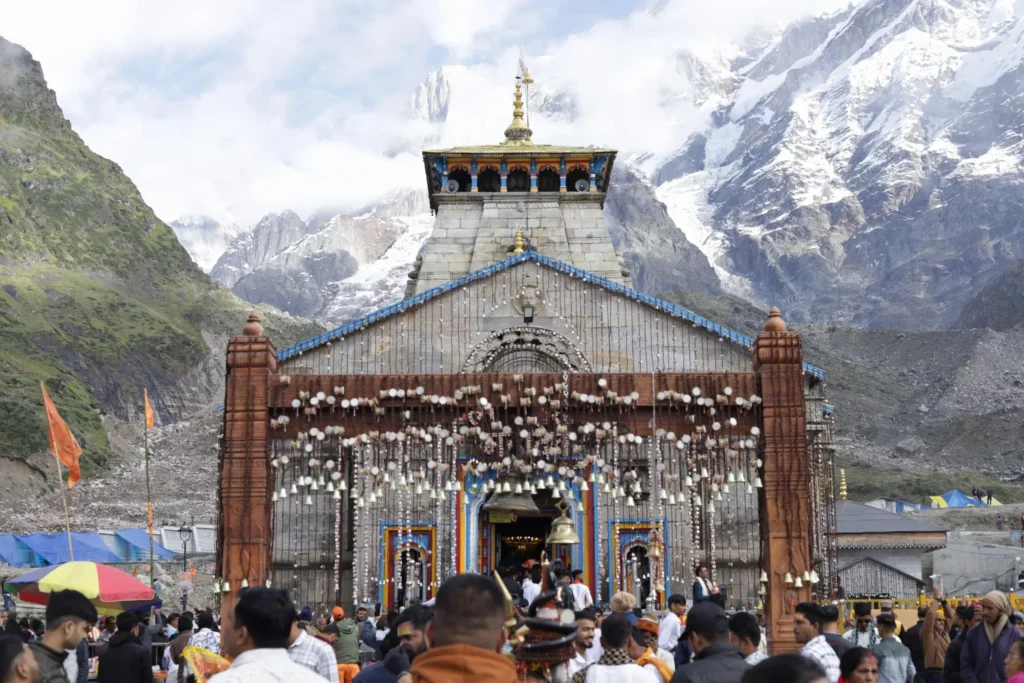
Chopta to Tungnath Trek
The Chopta to Tungnath Trek is the most important trekking experience associated with the destination.
The route climbs from Chopta towards Tungnath through mountain scenery, open sections and forested areas.
The commonly cited trekking distance is around 3–4 km one way, although the exact figure can vary depending on the starting point and route conditions. Uttarakhand Tourism describes the Chopta–Tungnath trek as roughly 4 km.
Chopta to Tungnath Trek Distance
Approximately 3–4 km one way, depending on the starting point.
Chopta to Tungnath Trek Time
Allow several hours rather than treating it as a quick walk. Your pace, fitness, weather and trail conditions all affect the time.
Chopta to Tungnath Trek Difficulty
The trail is uphill and becomes harder as you gain altitude.
Beginners can attempt it with preparation, but should not underestimate the climb.
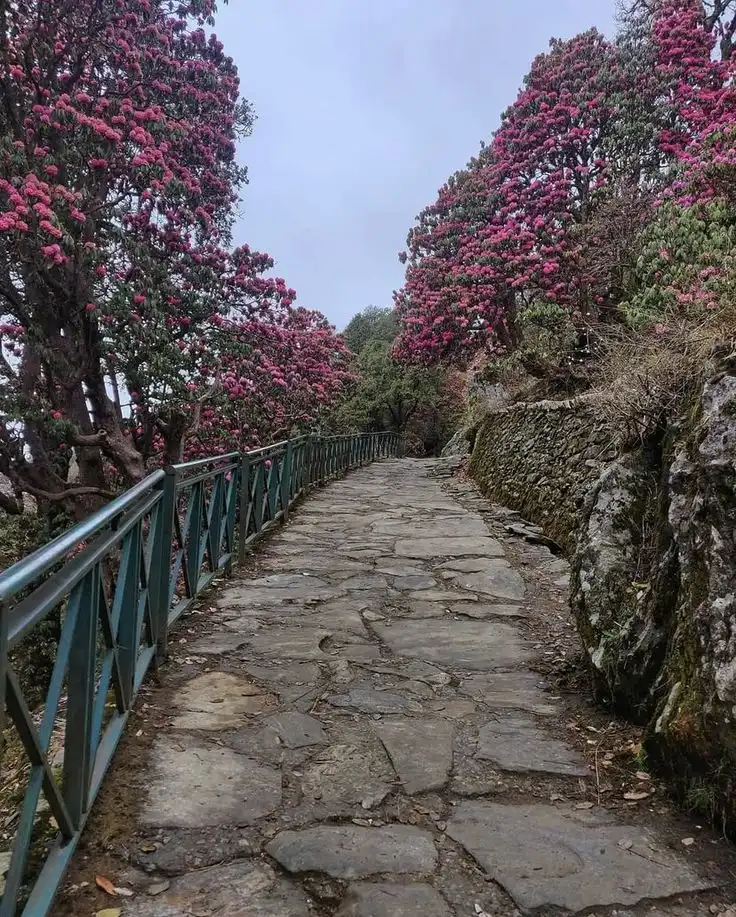
Chopta to Chandrashila Trek
The Chopta to Chandrashila Trek is one of Uttarakhand’s popular Himalayan treks. The route takes you from Chopta to Tungnath Temple and then up to Chandrashila Summit, with beautiful mountain views along the way.
Trek Route: Chopta → Tungnath → Chandrashila
Chopta to Chandrashila Trek Distance
The trek is approximately 5 km one way, depending on the route and starting point. The trail becomes steeper after Tungnath as you climb towards the Chandrashila summit.
- Difficulty: Moderate to challenging
- Best known for: Himalayan views and sunrise
- Winter: Snow can make the trail colder, slippery and more difficult
- Tip: Start early and carry warm clothing, water and suitable trekking shoes.
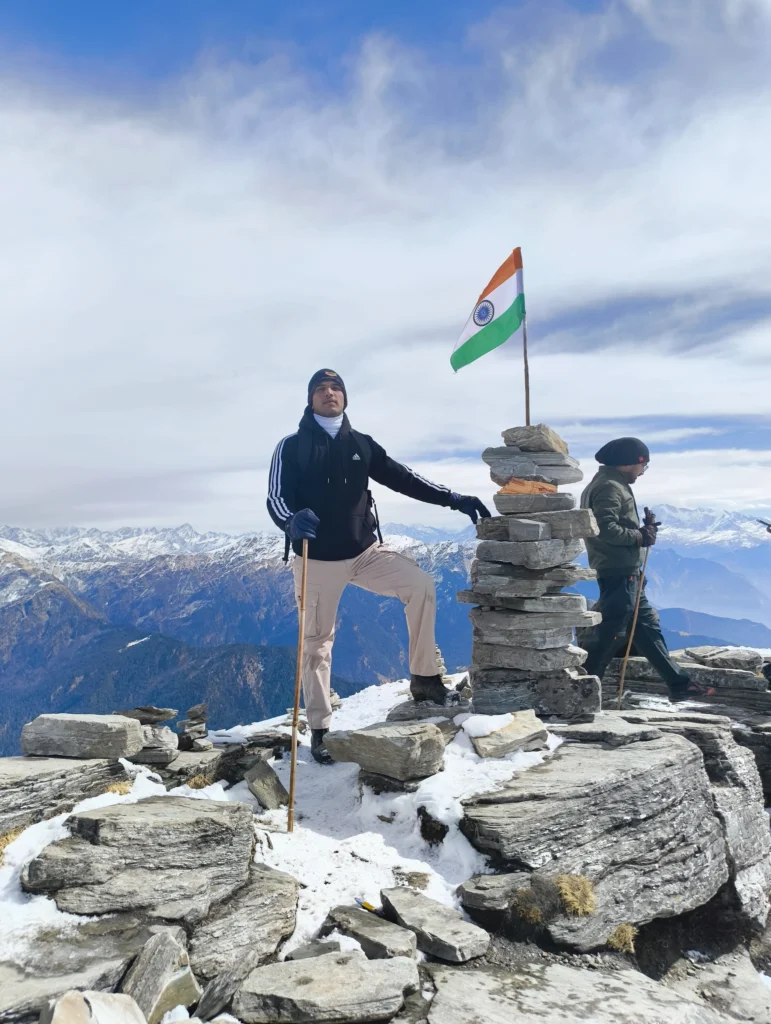
Deoria Tal Trek
The Deoria Tal Trek is a short and scenic Himalayan trek near Chopta. The trail starts from Sari Village and leads through forest paths to the peaceful Deoria Tal Lake, known for its beautiful reflections of the surrounding mountains.
The Chopta to Chandrashila Trek is one of Uttarakhand’s popular Himalayan treks. The route takes you from Chopta to Tungnath Temple and then up to Chandrashila Summit, with beautiful mountain views along the way.
Trek Route: Chopta → Tungnath → Chandrashila
Deoria Tal Trek Distance
The trek is approximately 5 km one way, depending on the route and starting point. The trail becomes steeper after Tungnath as you climb towards the Chandrashila summit.
- Difficulty: Moderate to challenging
- Best known for: Himalayan views and sunrise
- Winter: Snow can make the trail colder, slippery and more difficult
- Tip: Start early and carry warm clothing, water and suitable trekking shoes.
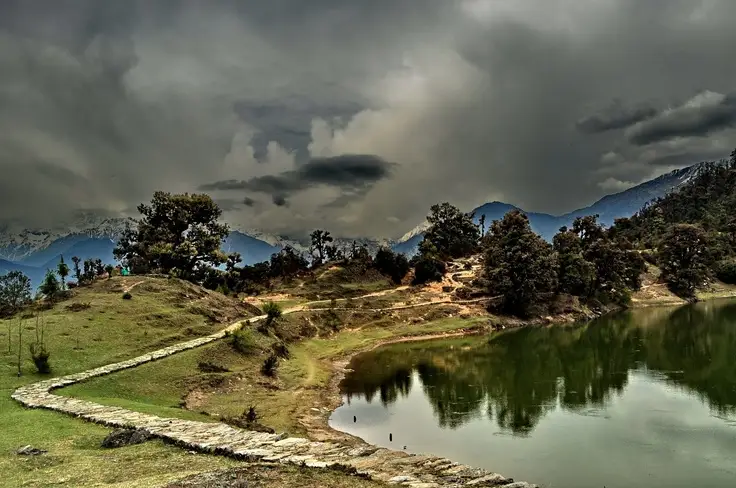
Where to Stay in Chopta Tungnath
Chopta offers simple homestays and camps for travellers who want a peaceful stay close to nature. Most stays provide basic facilities and meal options.
Chopta Homestays
Enjoy a comfortable local stay with home-style meals and a peaceful mountain setting.
Chopta Camps
Stay close to nature with camp accommodation, mountain views and meals.
SafarXpert Chopta Packages
SafarXpert offers complete Chopta packages with transport, homestay or camp stay, meals and travel support.
How Many Days Are Enough for Tungnath?
A 2-night, 3-day Tungnath trip is enough to cover the main attractions, including Tungnath, Chandrashila and Deoria Tal.
- Day 1: Rishikesh → Chopta | Scenic road journey and overnight stay.
- Day 2: Chopta → Tungnath → Chandrashila Trek → Return to Chopta.
- Day 3: Chopta → Sari Village → Deoria Tal Trek → Return to Rishikesh.
What to Pack for Chopta Tungnath
Your Tungnath packing list should match the season and your travel plans. For trekking to Tungnath or Chandrashila, carry comfortable and weather-ready essentials.
- Warm jacket and thermal layers
- Trekking shoes and woollen socks
- Gloves and warm cap
- Sunglasses and sunscreen
- Water bottle and small backpack
- Power bank and personal medicines
- Rain protection
- Basic first-aid kit
- Winter: Extra warm layers and suitable snow/traction gear
Why Choose Chopta Tungnath Instead of a Crowded Hill Station?
If you want a peaceful Himalayan holiday away from busy hill stations, Chopta Tungnath is a great choice. Enjoy green meadows, forests, snow, trekking, camping and beautiful mountain views in a quieter setting.
- Peaceful meadows and forests
- Snow in winter
- Tungnath and Chandrashila treks
- Camping and nature walks
- Beautiful Himalayan landscapes
Chopta can also be added to a Char Dham Yatra itinerary, making it a useful stop for travellers exploring the spiritual and scenic side of Uttarakhand.
Tungnath for Different Types of Travellers
Tungnath for Couples
A peaceful mountain setting, scenic stays and relaxed walks make Tungnath suitable for couples who prefer nature over crowded tourist centres.
Tungnath for Families
Families can enjoy the meadows and nearby sightseeing, while trekking plans should be chosen according to everyone’s fitness.
Tungnath for Friends
Trekking, camping, photography and road travel make Tungnath a good group destination.
Tungnath for Solo Travellers
Solo travellers can enjoy the quieter side of the region, but should plan transport, accommodation and trekking conditions carefully.
Tungnath for Beginners
Tungnath is an excellent starting point for learning how mountain trekking feels, but altitude and weather should still be taken seriously.
Tungnath Temple Travel Tips
Plan your Tungnath Temple visit with the weather, altitude and trek conditions in mind. These simple tips can make your Chopta to Tungnath trek safer and more comfortable:
- Start early: Allow enough time for the trek and return journey.
- Check weather: Confirm the latest forecast and trail conditions.
- Carry warm clothes: Temperatures can drop quickly at 3,680 metres.
- Walk at your pace: Take regular breaks and stay hydrated.
- Respect the temple: Follow local पूजा, photography and visitor rules.
- Avoid littering: Carry your waste back and help keep the trail clean.
- Keep plans flexible: Mountain weather and road conditions can change quickly.
Tungnath Trip Cost
The Tungnath trip cost depends on your travel dates, number of travellers, accommodation and transport. Your main expenses usually include:
- Transportation and local transfers
- Accommodation
- Meals
- Trek or guide support, if required
- Additional sightseeing
Tungnath Tour Packages by SafarXpert
Looking for an easy way to plan your trip? SafarXpert offers Tungnath tour packages with transport, stays and travel support.
Book your Tungnath package with SafarXpert today.
SafarXpert Packages
→ Chopta Tour Packages
→ Chopta Tungnath Trek Packages
→ Chopta Tungnath Chandrashila Trek Packages
→ Chopta Tungnath Chandrashila Deoria Tal Packages
📞 Call / WhatsApp: 9220431165
🌐 Website: www.safarxpert.com
Some Important Limks
Available Package Options
We offer different Char Dham tour packages based on your travel preferences.
| Package | Duration |
|---|---|
| Char Dham Yatra Package from Delhi | 11 Nights / 12 Days |
| Char Dham Yatra Package from Haridwar | 09 Nights / 10 Days |
| Do Dham Yatra Tour Package | Kedarnath & Badrinath Tour | 05 Nights / 06 Days |
| Kedarnath Yatra Package | 02 Nights / 03 Days |
| Customized Private Char Dham Tour | As per requirement |
Frequently Asked Questions AboutTungnath Temple
1. Where is Tungnath Temple located?
Tungnath Temple is located in the Rudraprayag district of Uttarakhand, near Chopta, at an elevation of about 3,680 metres.
2. Why is Tungnath Temple famous?
Tungnath is famous as a high-altitude Shiva temple and one of the five sacred Panch Kedar temples. According to the traditional belief, Shiva’s arms appeared here.
3. Which Kedar is Tungnath?
Tungnath is traditionally regarded as the third temple of the Panch Kedar group.
4. Which part of Shiva is worshipped at Tungnath?
According to the traditional Panch Kedar story, the arms of Lord Shiva appeared at Tungnath.
5. How far is Tungnath from Chopta?
The trek from Chopta to Tungnath is commonly described as around 3–4 km one way. Official sources give approximately 3 km, while other route descriptions use slightly different measurements.
6. How difficult is the Tungnath trek?
The trek is generally considered moderate because of the continuous uphill climb and high altitude. Fitness, weather and trail conditions can change the experience.
7. Can you drive to Tungnath Temple?
No. Vehicles can reach Chopta, but the final journey to Tungnath is completed on foot.
8. Is Tungnath part of Char Dham Yatra?
No. Tungnath is part of the Panch Kedar pilgrimage. The Char Dham of Uttarakhand are Yamunotri, Gangotri, Kedarnath and Badrinath.
9. Is Tungnath part of Panch Kedar?
Yes. Tungnath is one of the five Panch Kedar temples dedicated to Lord Shiva.
10. Can Tungnath and Chandrashila be visited together?
Yes. Chandrashila lies beyond Tungnath on the same trekking route, and many trekkers combine both destinations. Uttarakhand Tourism’s trekking itinerary places Chandrashila about 1.5 km beyond Tungnath.
11.When is Tungnath Temple open?
Tungnath is a seasonal temple and generally closes during the winter months because of heavy snowfall. Exact opening and closing dates should be checked from the latest official announcement each year.
12. What is the best time to visit Tungnath?
Spring, early summer and the post-monsoon period are commonly preferred, but the best date depends on current weather, trail conditions and the temple’s annual schedule.
13. What should I pack for a Tungnath trip?
Carry warm clothes, trekking shoes, woollen socks, gloves, sunglasses, sunscreen, a water bottle, personal medicines and rain protection.
Popular places include Tungnath Temple, Chandrashila, Deoria Tal, Sari Village and Baniyakund.
14. How can I book a Chopta package?
You can book a Chopta tour package with SafarXpert .Contact the SafarXpert team with your travel date, pickup location, number of travellers and preferred vehicle.
Website: www.safarxpert.com
Call / WhatsApp: 9220431165