

Introduction
If you are searching for the Char Dham names, it is important to know that the term is used for two different pilgrimage traditions.
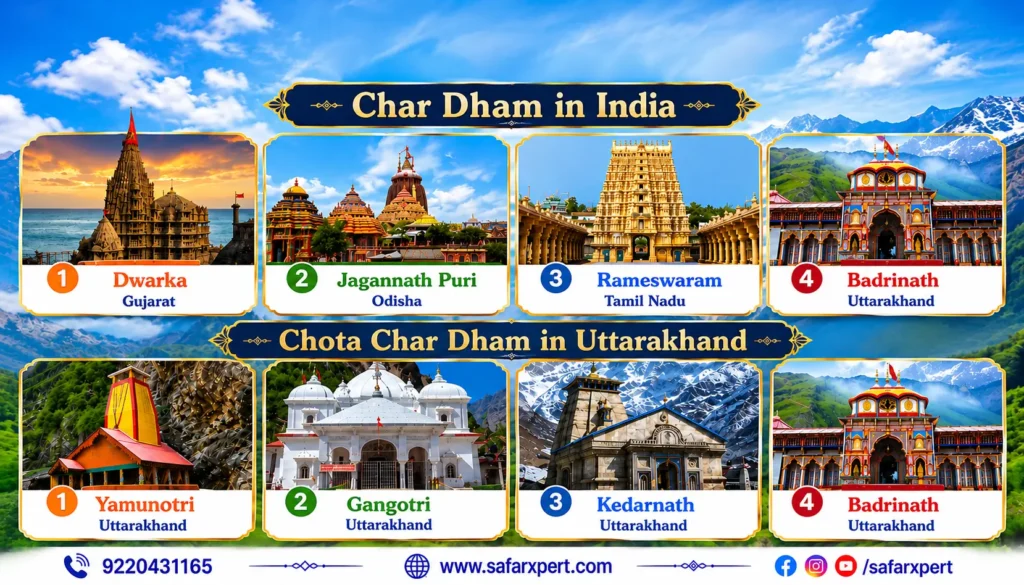
The traditional Char Dham of India includes Badrinath, Dwarka, Jagannath Puri and Rameswaram, located in different parts of the country.
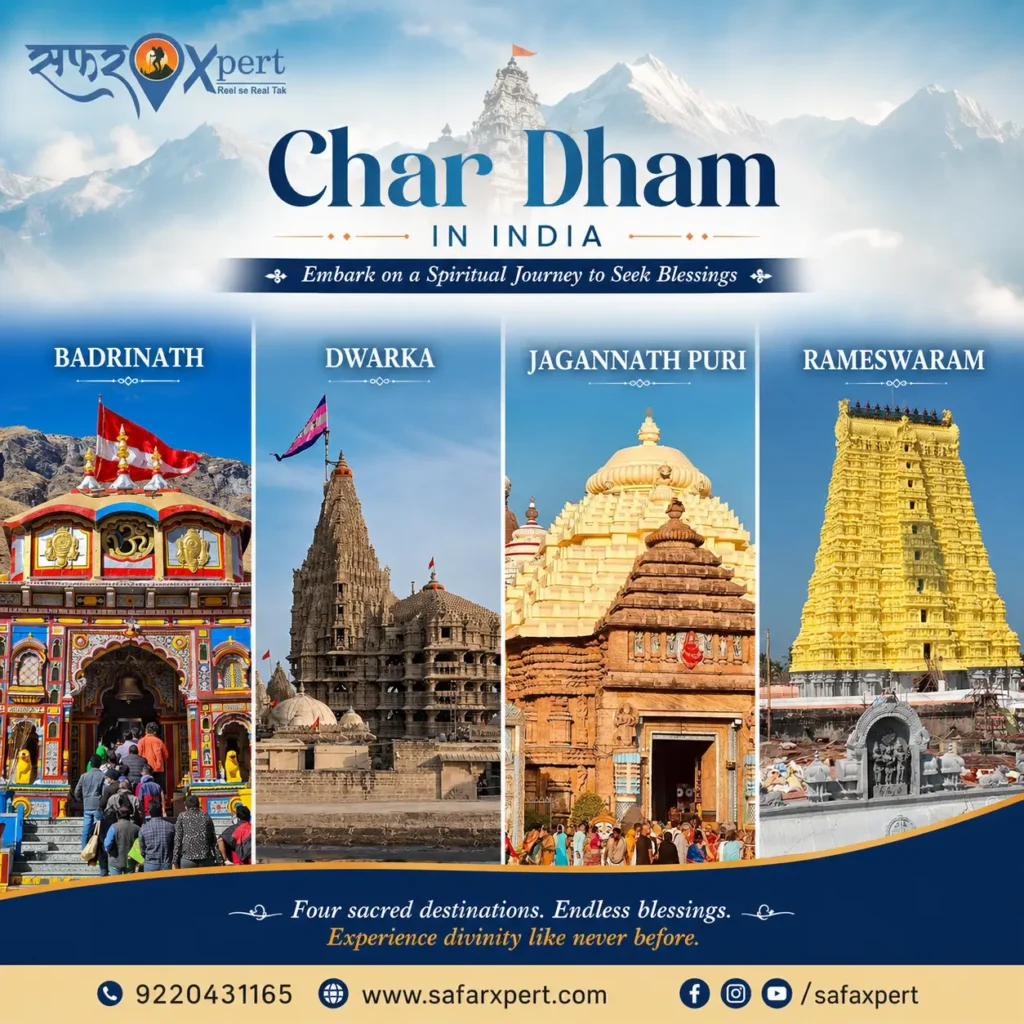
The Chota Char Dham of Uttarakhand refers to the Himalayan pilgrimage circuit of Yamunotri, Gangotri, Kedarnath and Badrinath.
Although both are known as Char Dham, they are different pilgrimage circuits. This guide explains the Char Dham name list, locations, states, religious significance, Chota Char Dham names and traditional Yatra sequence, along with useful information for travellers planning their pilgrimage.
What Are the 4 Char Dham Names in India?
The four traditional Char Dham pilgrimage sites are:
- Badrinath — Uttarakhand
- Dwarka — Gujarat
- Jagannath Puri — Odisha
- Rameswaram — Tamil Nadu
These four sacred destinations are spread across different parts of India. Badrinath lies in the Himalayas, Dwarka on the western coast, Puri on the eastern coast and Rameswaram in the south.
For someone looking for the simple Char Dham name list, the answer is:
Badrinath, Dwarka, Jagannath Puri and Rameswaram.
There is, however, another four-site pilgrimage circuit in Uttarakhand that is commonly called the Chota Char Dham.
Char Dham Name in India List with Place and State
Char Dham Name | Place | State |
Badrinath | Badrinath | Uttarakhand |
Dwarka | Dwarka | Gujarat |
Jagannath Puri | Puri | Odisha |
Rameswaram | Rameswaram | Tamil Nadu |
The four traditional Char Dham sites are located in different parts of India: Badrinath in Uttarakhand, Dwarka in Gujarat, Puri in Odisha, and Rameswaram in Tamil Nadu. Government tourism sources also identify these four destinations as the Char Dham of India.
Each destination has its own religious traditions, history and cultural character, making the Char Dham a pilgrimage tradition that connects different regions of India.
What Are the Chota Char Dham Names in Uttarakhand?
If your search is specifically about the Uttarakhand Char Dham, the four names are:
- Yamunotri
- Gangotri
- Kedarnath
- Badrinath
Uttarakhand Tourism describes these four Himalayan destinations as the state’s Char Dham Yatra. The traditional sequence begins at Yamunotri, continues to Gangotri, then Kedarnath and finally Badrinath.
This is the pilgrimage route many travellers have in mind when they search for Char Dham Yatra, particularly when planning a journey through the Garhwal Himalayas.
Chota Char Dham Name List
Chota Char Dham | District | Associated deity / sacred tradition |
Yamunotri | Uttarkashi | Goddess Yamuna |
Gangotri | Uttarkashi | Goddess Ganga |
Kedarnath | Rudraprayag | Lord Shiva |
Badrinath | Chamoli | Lord Vishnu |
The four Chota Char Dham names in one line
Yamunotri → Gangotri → Kedarnath → Badrinath
Chota Char Dham Yatra Sequence
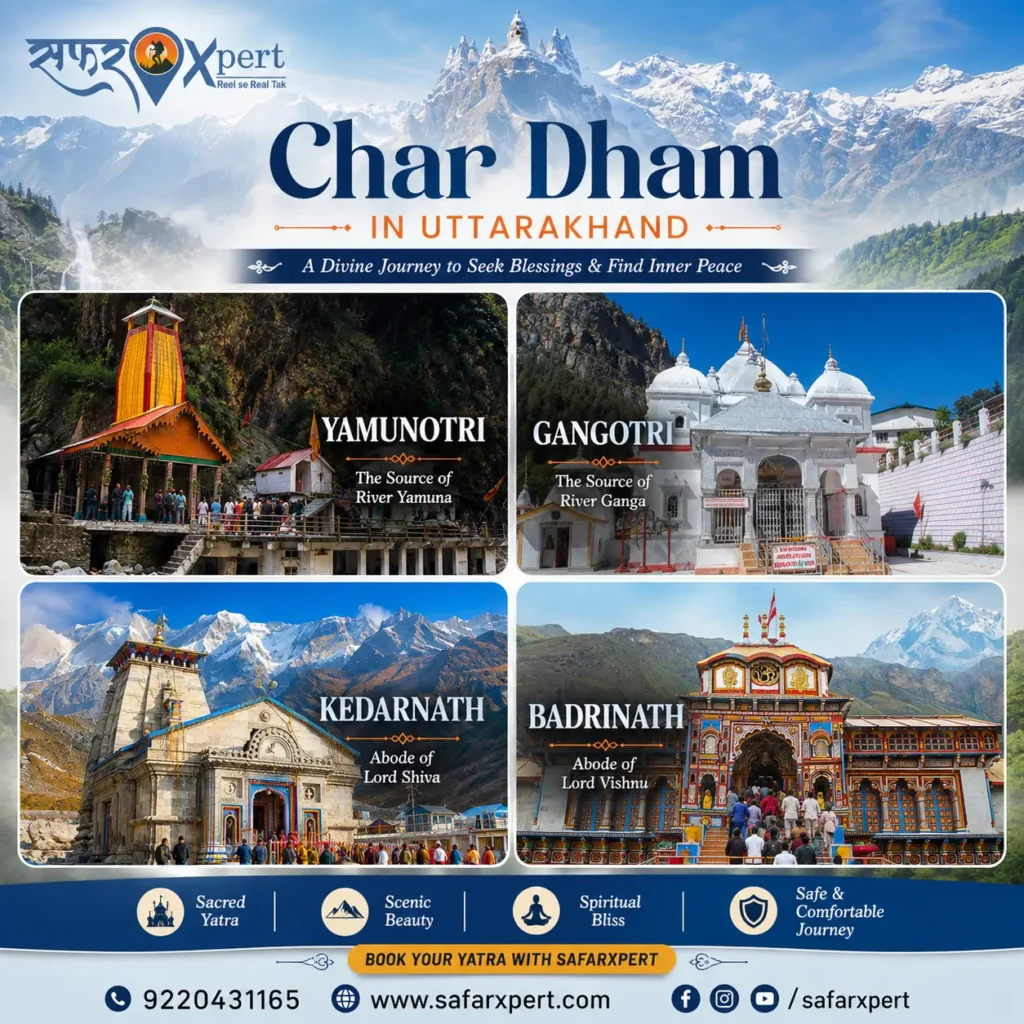
The traditional sequence of the Uttarakhand Char Dham Yatra is:
Yamunotri → Gangotri → Kedarnath → Badrinath
Uttarakhand Tourism describes the journey as traditionally proceeding in a clockwise direction, beginning at Yamunotri and continuing through Gangotri, Kedarnath and Badrinath.
The exact practical itinerary can vary according to road conditions, accommodation, weather, transport arrangements and the traveler’s starting point.
For current travel planning, always check official Uttarakhand sources before departure.
Chota Char Dham Temples Covered
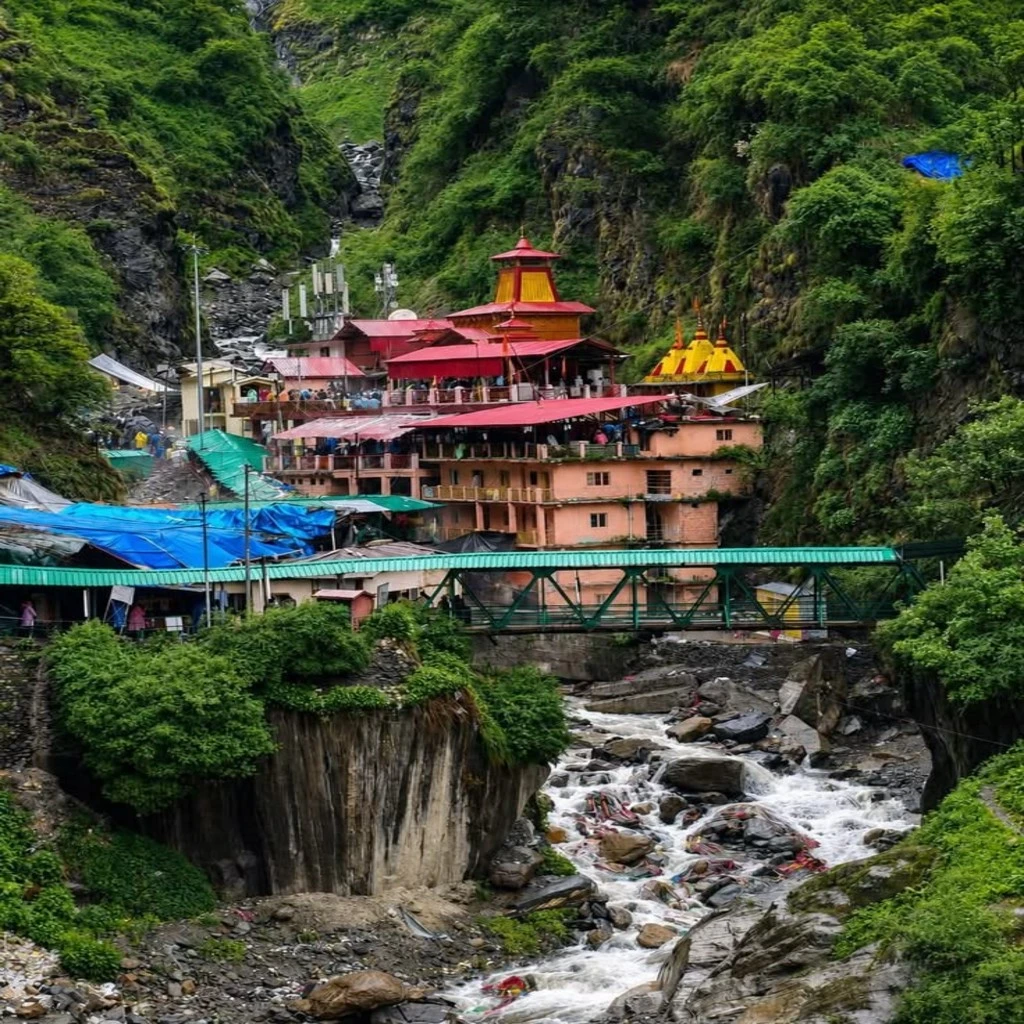
Yamunotri Dham
Yamunotri Dham is the first destination in the traditional Chota Char Dham sequence.
Located in Uttarkashi district, the shrine is dedicated to Goddess Yamuna. The pilgrimage route includes the approach from the roadhead area near Janki Chatti followed by a trek to the temple.
Uttarakhand Tourism’s official itinerary describes the trek from Janki Chatti to Yamunotri as approximately 6 km. Conditions can change, so travelers should verify current route and local advisories before starting the journey.
Why visit Yamunotri?
- Temple dedicated to Goddess Yamuna
- Himalayan pilgrimage experience
- Sacred hot-water springs in the area
- Mountain scenery and trekking route
- First major stop in the traditional Chota Char Dham sequence
Gangotri Dham
From Yamunotri, the traditional pilgrimage continues towards Gangotri.
Gangotri is also in Uttarkashi district and is centred around the temple dedicated to Goddess Ganga. The town sits high in the Garhwal Himalayas and is surrounded by forests, mountain peaks and the Bhagirathi River.
Gangotri is another place where careful wording matters.
The Gangotri Temple is a major pilgrimage destination associated with Goddess Ganga, but the physical source of the Bhagirathi is associated with Gaumukh in the Gangotri Glacier. Uttarakhand Tourism places Gaumukh about 19 km from Gangotri and notes that it is reached by trekking.
That distinction gives visitors a clearer understanding of the landscape.
Gangotri is not simply a point on a pilgrimage checklist. It is also a gateway to a much larger Himalayan environment.
Why visit Gangotri?
- Gangotri Temple
- Sacred association with Goddess Ganga
- Himalayan scenery
- Access to the wider Gangotri region
- Starting point for routes toward Gaumukh for eligible trekkers
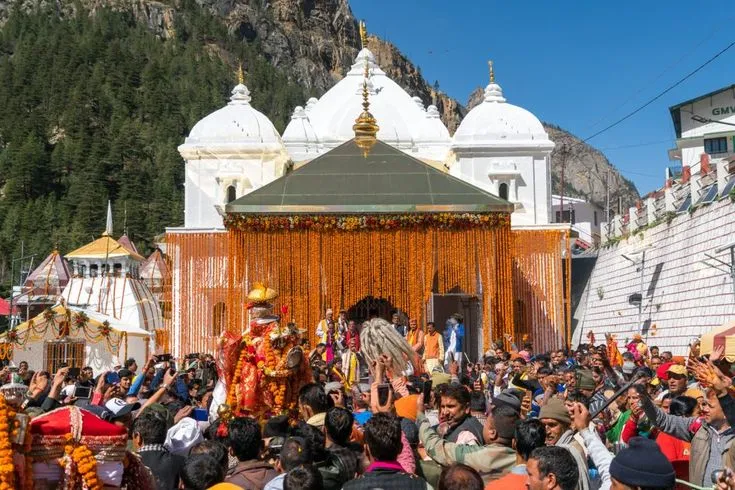
Kedarnath Dham
The third major stop in the traditional Uttarakhand Char Dham sequence is Kedarnath.
The journey here feels different again.
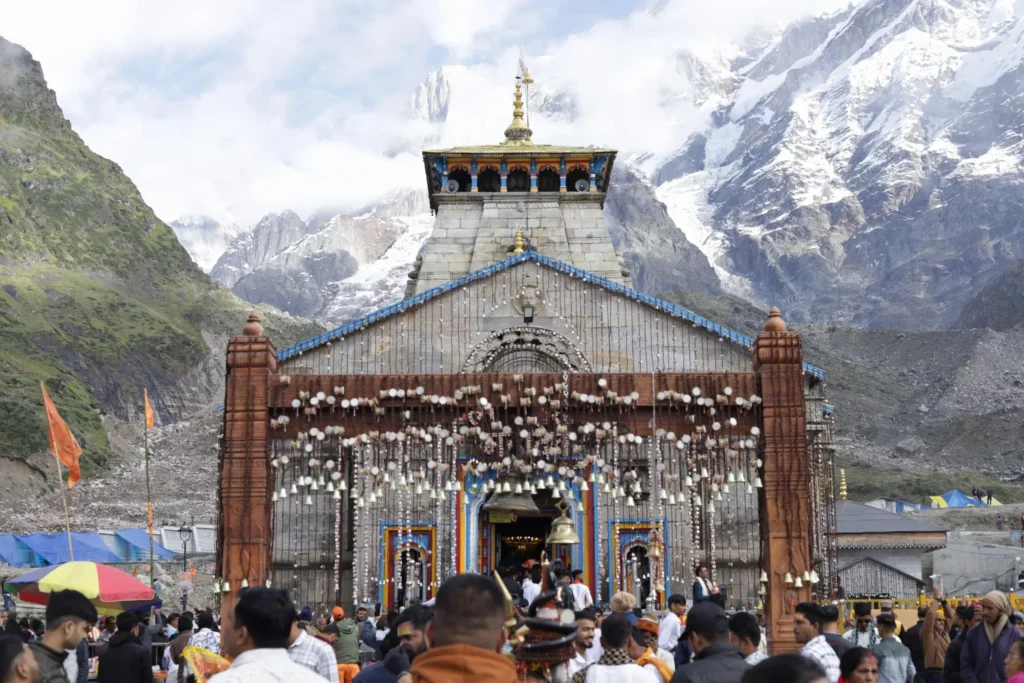
Kedarnath is located high in the Garhwal Himalayas in Rudraprayag district. The temple is dedicated to Lord Shiva and is one of the most important pilgrimage destinations in northern India. Uttarakhand Tourism places the town at approximately 3,580 metres above sea level.
Kedarnath Yatra is also one of the 12 Jyotirlingas of Lord Shiva, giving it significance beyond the Char Dham circuit.
The temple’s setting is a major part of the experience. Large stone walls, high Himalayan peaks and the valley surrounding the shrine give Kedarnath a character very different from a conventional temple town.
The journey is physically demanding, and travellers should plan according to their fitness, weather conditions and current local arrangements.
Kedarnath Dham
- Kedarnath Temple
- Important Shaiva pilgrimage
- One of the 12 Jyotirlinga shrines
- Dramatic Himalayan setting
- Major destination in the Chota Char Dham Yatra
Badrinath Dham
The final destination in the traditional Uttarakhand Char Dham sequence is Badrinath.
It is also the destination that connects the two Char Dham traditions discussed on this page.
Badrinath is one of the traditional Char Dham sites of India, and it is also one of the four Uttarakhand Char Dham destinations.
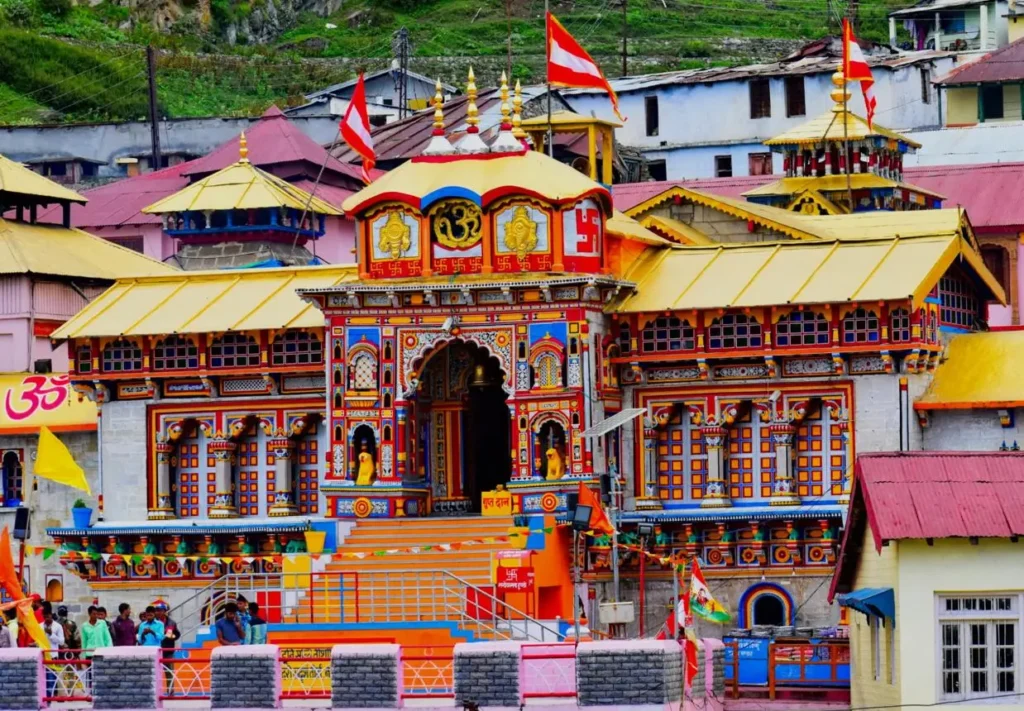
The temple, also known as the Badrinarayan Temple, is dedicated to Lord Vishnu. It stands beside the Alaknanda River in the Garhwal Himalayas at an elevation of around 3,100 metres, according to Uttarakhand Tourism.
For a traveller completing the Chota Char Dham Yatra, reaching Badrinath feels like arriving at the final chapter of a long mountain journey.
The landscape changes as the route approaches the Badrinath valley, but the sense of altitude and Himalayan scale remains.
Badrinath is particularly important because it belongs to both lists discussed in this guide:
- It is one of the traditional Char Dham of India.
- It is also one of the four Chota Char Dham sites of Uttarakhand.
What makes Badrinath unique?
Badrinath belongs to both of the Char Dham lists:
Traditional Char Dham of India:
Badrinath, Dwarka, Jagannath Puri, Rameswaram
Chota Char Dham of Uttarakhand:
Yamunotri, Gangotri, Kedarnath, Badrinath
This is why Badrinath Yatra is particularly important when explaining the difference between Char Dham and Chota Char Dham.
Char Dham vs Chota Char Dham
One of the most common sources of confusion is the difference between Char Dham and Chota Char Dham.
Feature | Traditional Char Dham | Chota Char Dham |
Region | Across India | Uttarakhand |
Number of sites | 4 | 4 |
Sites | Badrinath, Dwarka, Puri, Rameswaram | Yamunotri, Gangotri, Kedarnath, Badrinath |
Badrinath included? | Yes | Yes |
Main geographical character | Pan-India pilgrimage | Himalayan pilgrimage |
Common travel term | Char Dham | Chota Char Dham / Uttarakhand Char Dham |
Char Dham vs Chota Char Dham
The Uttarakhand circuit shares the name Char Dham because it consists of four important pilgrimage destinations. It is commonly distinguished as Chota Char Dham to separate it from the traditional all-India Char Dham.
When searching for Char Dham names, always check which circuit the information refers to.
Char Dham Name in Hindi
The traditional Char Dham names in Hindi are:
- बद्रीनाथ — उत्तराखंड
- द्वारका — गुजरात
- जगन्नाथ पुरी — ओडिशा
- रामेश्वरम — तमिलनाडु
Chota Char Dham names in Hindi
- यमुनोत्री
- गंगोत्री
- केदारनाथ
- बद्रीनाथ
Why Is Char Dham Important?
For pilgrims, Char Dham is not simply a list of four temples.
The four traditional sites connect different parts of India through pilgrimage. The Uttarakhand circuit brings together four Himalayan shrines, each with its own religious tradition, landscape and journey.
Yamunotri is associated with Yamuna.
Gangotri is associated with Ganga.
Kedarnath is dedicated to Shiva.
Badrinath is dedicated to Vishnu.
The journey therefore moves through very different landscapes and traditions while remaining part of one pilgrimage circuit.
Religious beliefs surrounding pilgrimage should be understood as matters of faith and tradition. A travel guide should distinguish those beliefs from geographical and travel facts.
Char Dham Opening & Closing Dates in India
The traditional Char Dham of India—Badrinath, Dwarka, Jagannath Puri and Rameswaram—does not follow one common opening and closing season. Because Badrinath lies high in the Himalayas, its temple closes during winter and reopens in spring, with the opening date traditionally announced around Basant Panchami and the closing date determined according to the temple’s religious calendar.
Dwarka, Jagannath Puri and Rameswaram remain active pilgrimage destinations throughout the year, although their daily darshan timings and special festival arrangements can vary. Puri, for example, attracts pilgrims throughout the year, while Dwarkadhish Temple and Ramanathaswamy Temple publish regular visiting schedules.
Badrinath: The Seasonal Char Dham
Badrinath’s winter closure is part of the rhythm of Himalayan pilgrimage. As snowfall makes the high-altitude shrine difficult to access, worship continues through associated winter arrangements at lower elevations until the temple doors reopen for the next pilgrimage season.Lorem ipsum dolor sit amet, consectetur adipiscing elit. Ut elit tellus, luctus nec ullamcorper mattis, pulvinar dapibus leo.
Chota Char Dham Yatra Opening & Closing Dates in Uttarakhand
The Chota Char Dham Yatra—Yamunotri, Gangotri, Kedarnath and Badrinath—follows a seasonal Himalayan cycle. The shrines generally open in spring and close around the arrival of winter, when heavy snowfall makes the high-altitude temples inaccessible.
Opening: A Season Begins with Sacred Festivals
The opening of the Uttarakhand Char Dham is closely connected with the Hindu calendar. Yamunotri and Gangotri traditionally open on Akshaya Tritiya, while the opening of Kedarnath is traditionally announced on Maha Shivratri. The opening of Badrinath is traditionally announced on Basant Panchami after religious and Panchang calculations.
Closing: The Deities Return to Their Winter Abodes
As winter approaches, the story of the Char Dham turns from opening ceremonies to winter worship. The temple portals close after special prayers, and the sacred traditions continue at lower-altitude winter seats—for example, Kedarnath’s worship continues at Ukhimath, Yamuna at Kharsali, and Ganga at Mukhba. Badrinath’s winter worship is associated with Joshimath and Pandukeshwar.
For travellers: Opening and closing dates change according to the Hindu calendar and temple traditions each year. SafarXpert should always link to the latest official Uttarakhand Tourism/registration information rather than publishing permanent calendar dates.
What Is the Best Time for Chota Char Dham Yatra?
Time | What to Expect |
May–June | Pleasant pilgrimage weather, but higher crowds |
July–August | Monsoon season; rain, landslides and travel disruptions can occur |
September–October | Generally a good period for clearer weather and pilgrimage travel |
November–April | Main high-altitude shrines are generally closed for the winter |
For most travellers, May–June and September–October are the most practical periods. The official tourism information lists the Char Dham Yatra pilgrimage season broadly from May to October, while individual destinations can have slightly different seasonal conditions.
Char Dham Yatra: Important Travel Information
The Uttarakhand Char Dham circuit is a high-altitude pilgrimage route. Travel conditions can change because of weather, road conditions, landslides, local restrictions and seasonal access.
Before traveling:
- Check current official Uttarakhand Tourism information.
- Check official Yatra registration requirements where applicable.
- Check current road and weather advisories.
- Plan accommodation in advance during busy periods.
- Allow extra time for mountain travel.
- Prepare appropriately for altitude and changing weather.
- Follow local administration and temple authorities.
- Verify trek, transport and helicopter information through authorized sources.
Uttarakhand Tourism’s official Char Dham material confirms that the shrines are seasonal high-altitude destinations and that the traditional sequence is Yamunotri, Gangotri, Kedarnath and Badrinath.
Some Important Links
Available Package Options
We offer different Char Dham tour packages based on your travel preferences.
| Package | Duration |
|---|---|
| Char Dham Yatra Package from Delhi | 11 Nights / 12 Days |
| Char Dham Yatra Package from Haridwar | 09 Nights / 10 Days |
| Do Dham Yatra Tour Package | Kedarnath & Badrinath Tour | 05 Nights / 06 Days |
| Kedarnath Yatra Package | 03 Nights / 04 Days |
| Customized Private Char Dham Tour | As per requirement |
Frequently Asked Questions
1. What are the 4 Char Dham names in India?
The traditional four Char Dham names are Badrinath, Dwarka, Jagannath Puri and Rameswaram.
2. What are the Chota Char Dham names?
The four Chota Char Dham sites in Uttarakhand are Yamunotri, Gangotri, Kedarnath and Badrinath.
3. What are the Char Dham names in Hindi?
The traditional names are बद्रीनाथ, द्वारका, जगन्नाथ पुरी और रामेश्वरम.
The Uttarakhand Chota Char Dham names are यमुनोत्री, गंगोत्री, केदारनाथ और बद्रीनाथ.
4. Which are the 4 Dham in India?
The four traditional all-India Dhams are Badrinath in Uttarakhand, Dwarka in Gujarat, Jagannath Puri in Odisha and Rameswaram in Tamil Nadu.
5. Where are the 4 Char Dham located?
The traditional Char Dham are located in four different states: Uttarakhand, Gujarat, Odisha and Tamil Nadu.
6. What are the four Uttarakhand Char Dham names?
The four Uttarakhand Char Dham sites are Yamunotri, Gangotri, Kedarnath and Badrinath.
7. What is the Chota Char Dham Yatra sequence?
The traditional sequence is Yamunotri → Gangotri → Kedarnath → Badrinath.
8. Is Badrinath part of both Char Dham and Chota Char Dham?
Yes. Badrinath is part of the traditional all-India Char Dham and also the Chota Char Dham circuit in Uttarakhand.
9. Is Kedarnath one of the traditional Char Dham?
Kedarnath is not one of the traditional all-India Char Dham sites. It is one of the four Chota Char Dham sites in Uttarakhand and is also one of the 12 Jyotirlinga shrines.
10. Is Kedarnath a Jyotirlinga?
Yes. Kedarnath is traditionally recognized as one of the 12 Jyotirlinga shrines of Lord Shiva.
11. Which Char Dham is in Uttarakhand?
Kedarnath is not one of the traditional all-India Char Dham sites. It is one of the four Chota Char Dham sites in Uttarakhand and is also one of the 12 Jyotirlinga shrines.
12. What is the difference between Char Dham and Chota Char Dham?
Kedarnath is not one of the traditional all-India Char Dham sites. It is one of the four Chota Char Dham sites in Uttarakhand and is also one of the 12 Jyotirlinga shrines.